Punching bags
Last updated: April 6, 2026
How to choose the ideal double-end bag to improve your precision and rhythm
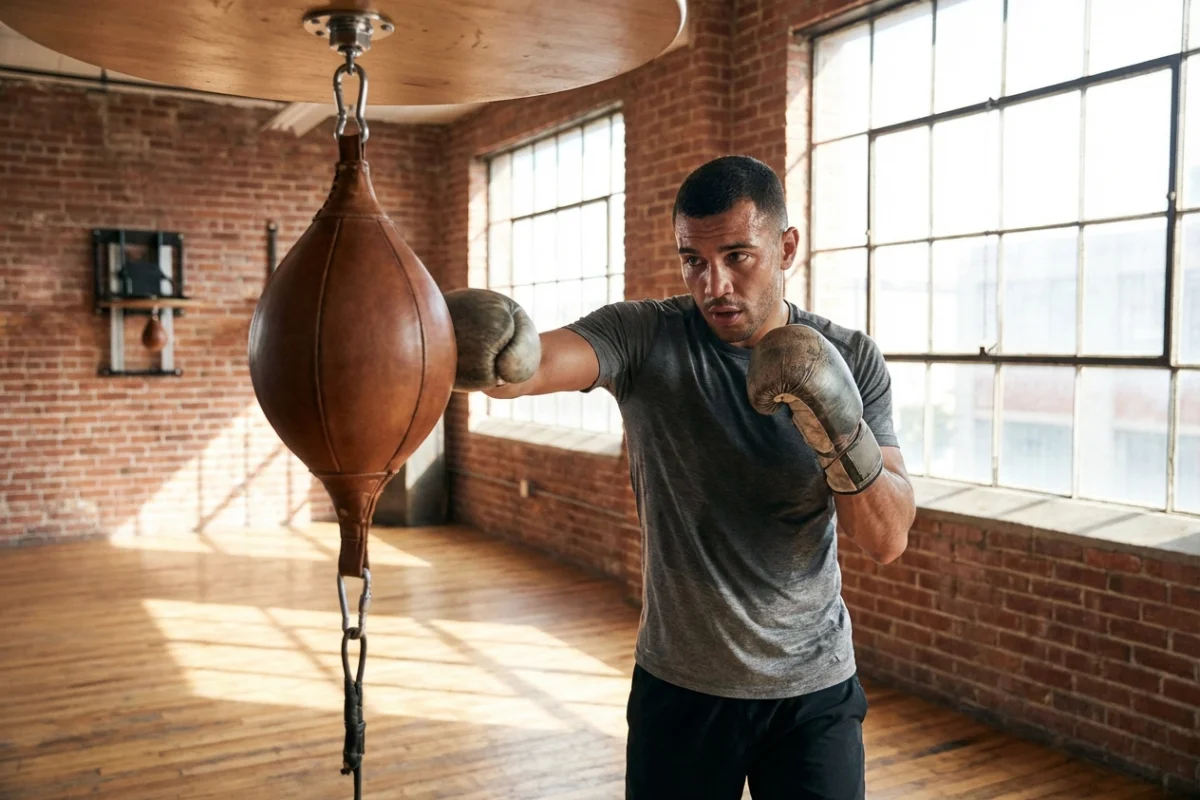
Choosing a double-end bag, also known as a floor-to-ceiling bag, is a fundamental step for any boxer who wants to take their precision, timing, and head movement to the next level. Unlike the heavy bag, this equipment hits back, forcing you to react and maintain an active guard at all times.
In this guide, you will discover how to choose the ideal double-end bag according to your technical goals and available space. We will analyze critical factors such as ball size, elastic quality, and manufacturing materials to ensure your investment truly improves your performance in the ring.
If you are looking for equipment that combines dynamism, improved reflexes, and eye-hand coordination, here you will find all the information needed to make the right decision. You will learn to differentiate between available models and how to set the proper tension so that your training is as realistic and effective as possible.
What is a double-end bag and why do you need it?
The double-end bag, also popularly known as the 'crazy bag', is one of the most effective tools for any combat sports practitioner. Unlike the traditional heavy bag, this equipment is attached to both the ceiling and the floor by elastic cords, which creates a fast and unpredictable bouncing movement after each impact.
Its main function is not to develop punching power, but to improve accuracy, rhythm, reflexes, and hand-eye coordination. When hitting the bag, it returns towards the user at high speed, forcing them to keep their guard up, move laterally, and constantly adjust the timing of their punches.
Incorporating this element into your training routine allows you to more realistically simulate the exchange of blows with an opponent, fostering a mental and physical agility that other gym equipment cannot offer.
Key factors for choosing the ideal model
Not all double-end bags are the same. To choose the one that best suits your needs, it is essential to pay attention to certain technical aspects that will determine the quality of your training.
1. Ball size
Size directly influences the difficulty of the exercise. Larger bags (about 8 to 10 inches) are ideal for beginners, as they offer an easier target to hit and move somewhat slower. Conversely, small bags (5 to 7 inches) are for advanced users looking for a greater challenge in speed and precision.
2. Manufacturing material
Durability is key. Genuine leather bags are the most resistant and offer a superior feel, although their price is higher. Synthetic leather or vinyl options are more economical and suitable for occasional home use, but tend to wear out faster at the seams due to constant tension.
3. Quality of elastic cords
The bag's response depends on its tensioners. It is advisable to look for models that include high-resistance and adjustable elastic cords. A good anchoring system allows you to modify the tension: tighter cords offer a faster rebound, while looser cords allow for a wider and more erratic movement.
4. Bag shape
There are models with a spherical shape (classic) and others with a 'peanut' or double-sphere shape. Spherical ones are better for practicing straight punches, while double-sphere ones allow you to work different angles and heights, better simulating an opponent's head and torso.
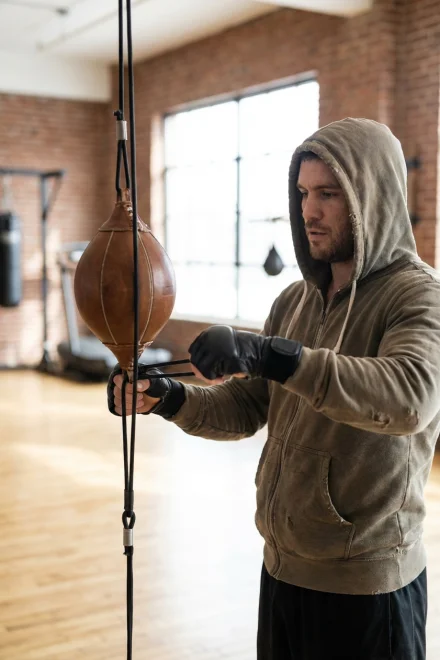
How to adjust tension to improve your rhythm
The tension of the cords is the factor that defines the personality of your double-end bag. If you are a beginner, the ideal is to start with moderate tension. This will allow the bag to move in a wider arc, giving you time to see the rebound coming and prepare the next punch.
As your technique improves, you should increase the tension. A very tight bag will vibrate and return almost instantaneously, forcing you to work in short, fast bursts, improving your hand speed and slipping ability. Remember that the goal is not to hit hard, but to maintain a constant flow of movement and precision.
Maintenance and usage tips
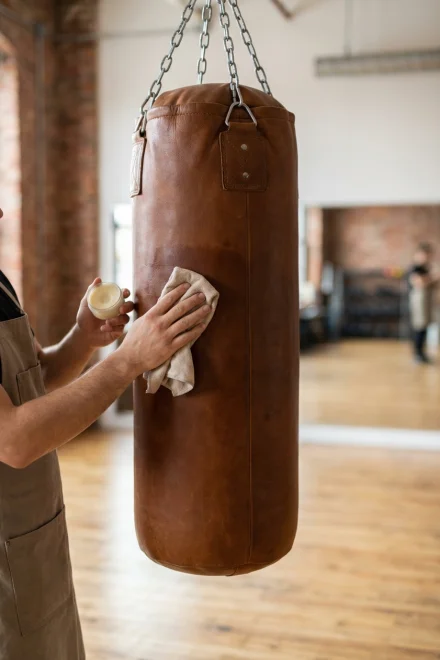
To prolong the life of your equipment, it is vital to perform basic maintenance. If your bag is made of leather, periodically apply a conditioner to prevent the material from drying out and cracking with sweat and use.
- Check the anchors: Check that the ceiling and floor hooks are firm to avoid accidents.
- Air pressure: Do not over-inflate the bag; it should have a slight flexibility when pressed with your fingers to prevent the inner bladder from bursting.
- Use bag gloves: Although the bag is light, using hand wraps or bag gloves will protect your knuckles from constant friction.
- Clean off sweat: Wipe with a dry cloth after each session to avoid bad odors and corrosion on metal parts.
Common mistakes when training with the double-end bag
One of the most common mistakes is trying to hit the bag with too much force. This causes the rebound to be so violent that control of the exercise is lost. The double-end bag requires precise and controlled touches, not raw power.
Another frequent failure is staying static. The purpose of this equipment is for you to move your feet and head. If you stand still in front of the bag, you are wasting its ability to teach you defense. You must hit, slip, and move as if you were in a real ring.
Finally, many users forget to keep their eyes on the target. It is common to close your eyes or turn your face away when the bag returns quickly. Practicing keeping your gaze fixed on the bag while it moves will give you a huge competitive advantage in any real fight.
Conclusion
Choosing the ideal double-end bag depends on your current level and your long-term goals. If you are looking to improve your agility and stop being a static target, this is the best investment you can make for your personal gym.
Remember to prioritize the quality of materials and spend time setting up the proper tension. With consistency and the right equipment, you will notice how your precision and rhythm reach a professional level in a short time.
Start working on your reflexes today and transform the way you box with the ultimate precision tool.
Frequently asked questions about how to choose a double-end bag
What is a double-end bag and what is it for?
It is a small inflatable ball attached by elastic cords to the ceiling and the floor. It serves to improve precision, rhythm, reflexes, and head movement, as the bag bounces back quickly toward the boxer after each impact.
What bag size is best for a beginner?
For beginners, a 9 to 11-inch (large) bag is recommended. Having a larger impact surface, it is easier to hit and moves more predictably, allowing you to develop basic rhythm before moving on to smaller models.
What is the difference between a small bag and a large one?
Large bags (10-12") are better for basic coordination and rhythm. Small bags (5-7") are much faster and harder to hit, making them ideal for advanced boxers looking to maximize their speed and surgical precision.
What material is most durable for this equipment?
Genuine leather is the most recommended material for its durability and feel. Although there are more economical synthetic leather options, natural leather better withstands constant tension and repetitive impacts without deforming or cracking.
How does the tension of the elastic cords influence it?
High tension makes the bag return faster and in a shorter arc, ideal for working on speed. Lower tension allows for wider movement, useful for practicing footwork and slips with a longer range.
What type of gloves should I use with the double-end bag?
Ideally, you should use lightweight bag gloves or hand wraps. Using 16-ounce gloves is not recommended, as the excessive weight hinders the speed needed to keep up with the bag's rhythm and can damage the air bladder if hit with too much brute force.
Is it difficult to install a double-end bag at home?
It requires fixtures on the ceiling and the floor. If you don't want to drill into the floor, you can use a heavy anchor base (like a specific sandbag). The key is to ensure there is enough space for the bag to swing without hitting walls.
How does this bag help improve head movement?
Because the bag bounces directly back toward your face after hitting it, it forces you to perform slips, ducks, and rolls instinctively. It is the best equipment for simulating the trajectory of a real counter-punch.
What maintenance does the internal air bladder require?
It is important to keep it inflated to the correct pressure (without over-inflating to prevent it from bursting). It is recommended to lubricate the inflation needle before inserting it to avoid damaging the valve and to periodically check that the elastics do not show fraying.
What is the difference between the speed bag and the double-end bag?
The speed bag focuses on shoulder endurance and constant rhythm against a platform. The double-end bag is more unpredictable and reactive, focusing on punching precision and active defense.