Punching bags
Last updated: April 3, 2026
How to choose the ideal speed bag to improve your reflexes and coordination
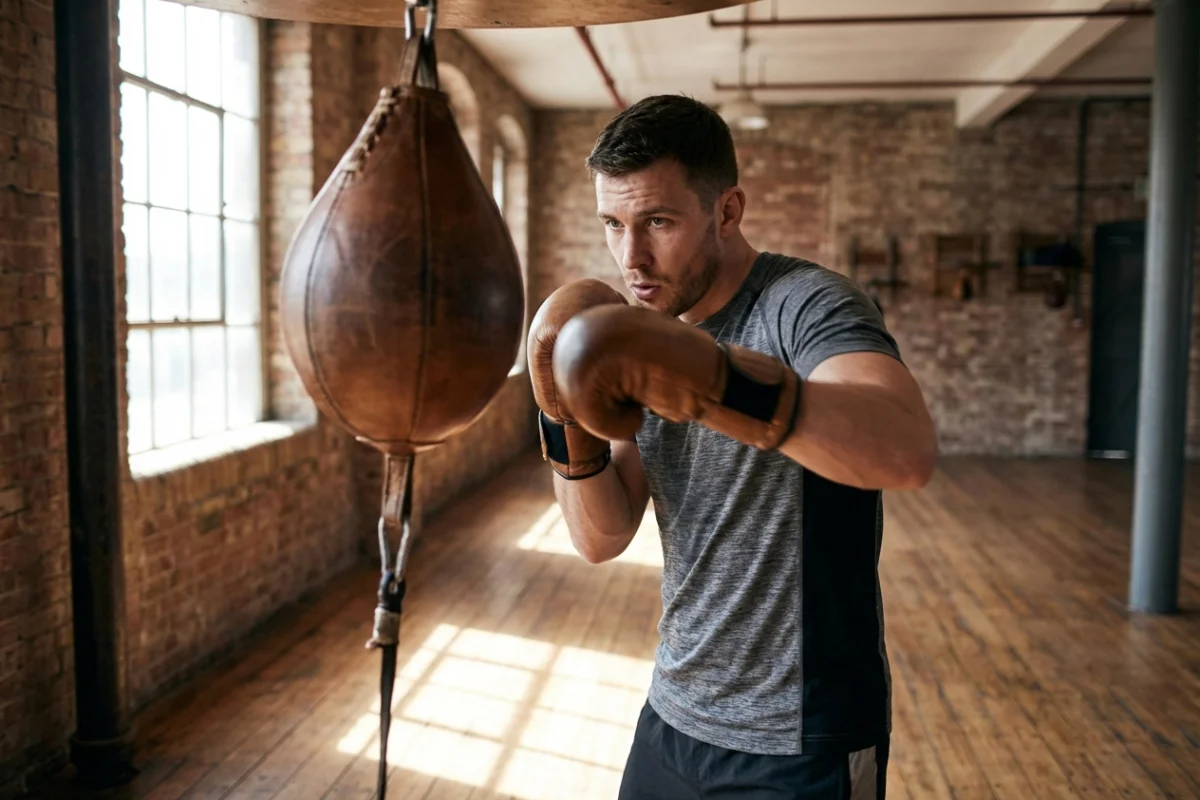
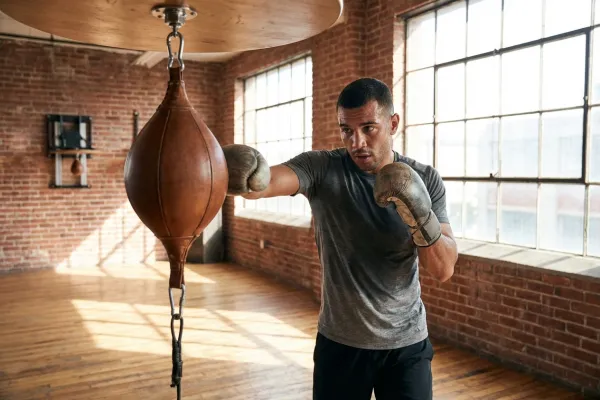
The speed bag, or speed bag, is one of the most iconic and beneficial elements in boxing training. Unlike the heavy bag, its goal is not power, but the development of hand-eye coordination, rhythm, shoulder endurance, and precision.
Choosing the right bag can make the difference between a fluid workout and a frustrating one. Factors such as size, material, and rebound quality are decisive for you to progress in your technique and punching speed consistently.
In this guide, we will teach you how to choose the ideal speed bag according to your experience level. We will analyze everything from the largest models for beginners to ultra-fast bags for experts, ensuring you find the perfect tool to take your reflexes to the next level.
How to choose the ideal speed bag to improve your reflexes and coordination
The speed bag, also known as a speed ball, is one of the most iconic and effective tools in the world of boxing and fitness. Its use not only improves hand speed, but is fundamental for developing superior eye-hand coordination, rhythm, and shoulder endurance. However, choosing the right model can be a challenge if you don't know the technical specifications.
Not all speed bags are the same; they vary in size, material, and weight, factors that directly determine the difficulty of the training. An incorrect choice can lead to frustration if it is too fast for a beginner, or be boring if it is too slow for an expert. Therefore, understanding what to look for is the first step to mastering this equipment.
Below, we will analyze the key aspects so you can find the speed bag that best suits your goals and current level, guaranteeing constant progression in your training.
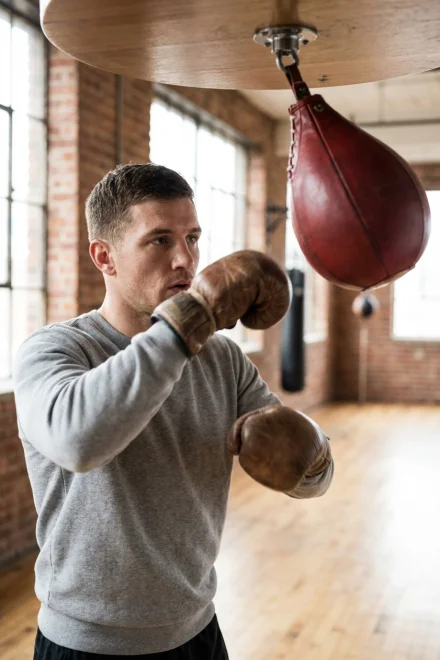
Benefits of training with a speed bag
Training with the speed bag offers specific benefits that are hard to achieve with other bags. The most prominent is the improvement of rhythm and timing. When hitting the bag, the athlete must learn to listen to the rebound and strike at the exact moment, which translates into better time management during a real fight.
Another vital aspect is shoulder strengthening. Keeping the arms up for several rounds in front of the bag generates incredible muscular endurance, necessary to keep the guard up when fatigue sets in. Additionally, it promotes visual precision, forcing the brain to process objects moving at high speed.
Finally, it is an excellent tool for low-impact cardiovascular conditioning, allowing you to burn calories while perfecting circular striking technique and improving mental agility.
Key factors: Size and manufacturing material
Size is the most critical characteristic: the smaller the bag, the faster it rebounds and the harder it is to hit accurately. Beginners should opt for large sizes, while advanced users usually prefer XS models.
Regarding materials, genuine leather is the gold standard. It offers the most consistent rebound, is soft to the touch (avoiding knuckle irritation), and has much higher durability than synthetic materials.
Synthetic leather or vinyl bags are more economical options, ideal for occasional use, although they tend to lose their shape over time and the rebound can be less predictable due to the seams.
Don't forget to check the internal air bladder; latex ones are lighter and faster but lose air easily, while butyl ones maintain pressure longer but are slightly heavier.
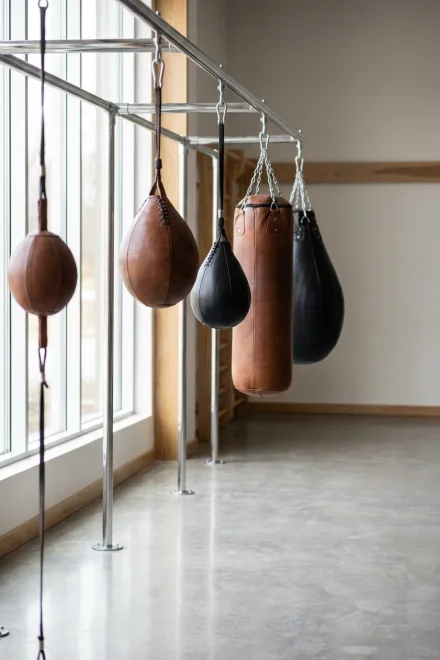
Types of speed bags according to your experience level
Selecting the right bag depends directly on your technical skill. A common mistake is buying a very small bag thinking it will speed up learning, when in reality it usually causes demotivation due to the difficulty of controlling it.
🥊 Beginners (Sizes L or XL)
Large and heavy bags that offer a slow and predictable rebound. Ideal for learning the basic circular movement and developing initial rhythm without constantly missing strikes.
⚡ Intermediates (Size M)
The perfect balance between speed and control. They allow for increasing training intensity and starting to work on more complex and faster combinations with greater fluidity.
🔥 Advanced (Sizes S or XS)
Very small models that require extreme coordination. The rebound is frantic, forcing the athlete to maintain total concentration and minimal hand movements.
🏆 Professionals (Micro Size)
Used almost exclusively by experts for pure speed exhibitions. They are extremely difficult to control and demand perfect striking technique and timing.
🧘 Fitness and Recreational
Usually medium-sized bags with padded materials. They focus on burning calories and constant movement rather than competitive boxing technique.
🧒 Children and Youth
Lightweight and small-sized models adapted to the strength and reach of the little ones, prioritizing safety and ease of use to encourage the sport.
Remember that the logical progression is to start with a large bag and decrease the size as your coordination improves. The ideal speed bag is the one that challenges you without being impossible to hit.
Tips for maintaining your speed bag
💨
Do not over-inflate it; it should have slight flexibility when pressed with the thumb to prevent the bladder from bursting upon impact.
🛢️
Lubricate the swivel or rotating axis regularly with a drop of oil so that the movement is fluid, fast, and quiet.
🧼
Wipe off sweat after each session with a dry cloth; saline moisture can crack the leather and deteriorate the seams.
🌡️
Avoid leaving the bag in places with extreme temperatures or direct sunlight, as it damages both the outer material and the elasticity of the bladder.
🩹
If you notice it losing air slightly, apply a little Vaseline to the valve before inflating it to improve the airtight seal.
Technical guide to dimensions and performance
Understanding measurements and rebound
The dimensions of a speed bag are generally measured by its height and its maximum diameter. A 10x7 inch (25x18 cm) bag is considered the standard for general training, while a 5x4 inch one is a micro-bag for experts. Weight also influences: a heavier bag requires more force to start the movement but maintains inertia better.
It is essential that the bag is perfectly centered. If the seams are misaligned or the air bladder is poorly placed, the bag will bounce sideways erratically, ruining the training rhythm. Therefore, prestigious brands place special emphasis on design symmetry.
Performance comparison by size
| Size | Dimensions (approx) | Rebound speed | Difficulty level | Main objective |
|---|---|---|---|---|
| Extra Large (XL) | 30 x 20 cm | Low | Very easy | Initiation and strength |
| Large (L) | 25 x 18 cm | Medium-Low | Easy | Rhythm and endurance |
| Small (S) | 20 x 13 cm | High | Difficult | Speed and reflexes |
| Micro | 15 x 10 cm | Extreme | Very difficult | Surgical precision |
In conclusion, the choice of your speed bag should evolve with you. Don't be afraid to start with a large model to establish technical foundations; speed will come with constant practice and the right equipment. A good speed bag workout will not only make you faster but will give you that rhythmic confidence necessary in any contact discipline.
Frequently asked questions about how to choose a speed bag
What benefits does speed bag training provide?
Training with the speed bag significantly improves hand-eye coordination, increases muscular endurance in the shoulders, and helps develop a sense of rhythm and timing essential for real combat.
What size speed bag is recommended for a beginner?
Beginners should opt for large bags (10x7 or 11x8 inches). Having more volume, they move slower and offer a larger impact area, making it easier to learn the basic rhythm without frustration.
What is the best material for a speed bag?
Genuine leather is the preferred material for professionals due to its durability and superior rebound quality. Synthetic options are more affordable, but they tend to lose their shape and have a less predictable rebound.
How does size influence training speed?
The smaller the size, the greater the speed and difficulty. Small bags (5x8 or smaller) require much faster reflexes and pinpoint precision, making them ideal for advanced boxers looking to perfect their agility.
What is the 'swivel' and why is it important?
The swivel or rotating axis is the piece that connects the bag to the platform. A high-quality swivel, preferably with ball bearings, ensures fluid 360-degree movement and a consistent rebound without annoying vibrations.
At what height should the speed bag be placed?
The widest part of the bag (the 'belly') should be exactly at eye or mouth level. If it is too high or too low, it will negatively affect your posture and the correct mechanics of circular punching.
Is it necessary to use gloves to hit the bag?
It is not mandatory to use standard boxing gloves. It is recommended to use wraps or light bag gloves to protect the knuckles from friction with the leather, allowing you to maintain sensitivity and maximum execution speed.
How should a speed bag be properly inflated?
It should be firm to the touch but with a slight elasticity. Do not over-inflate it, as you could damage the internal air bladder or cause the rebound to be too violent and uncontrollable for training.
What is the difference between a speed bag and a double-end bag?
The speed bag rebounds against a fixed platform to work on rhythm. The double-end bag is attached by elastics to the ceiling and floor, simulating an opponent's movement to work on slips, counter-punches, and precision.
How to keep the speed bag in good condition?
Wipe off sweat after each session with a dry cloth. If it is leather, occasionally apply a leather conditioner to prevent the material from drying out and cracking, extending its lifespan for years.