
Kids' boxing gloves
Kids' boxing gloves are essential so little ones can practice this sport safely, comfortably, and with fun. They are not only protective gear, but also a tool that encourages discipline, respect, and physical development. Choosing the right glove is key to avoiding injuries and ensuring a positive experience in training or first bouts. In this guide, you will find everything you need to know about sizes, materials, safety, and the most recommended models for children starting boxing.
See kids' boxing gloves on Amazon
Why is it important to choose kids' boxing gloves well?
Children's boxing has gained popularity in recent years thanks to its benefits for coordination, discipline, and confidence in little ones. However, as with any combat sport, safety must be a priority. Kids' boxing gloves protect the young boxer's hands and wrists and cushion punches toward an opponent or bag. Choosing the right model prevents common injuries such as sprains, fractures, or inflammation.
A common mistake is buying adult gloves so kids can 'grow into them'. This is counterproductive, since the wrong size and weight can affect their technique and put their joints at risk. Kids' gloves are specifically designed for smaller hands, with adapted padding and closures that ensure firmness and comfort.
Beyond safety, there is also a motivational factor: children love training with colorful, lightweight gloves tailored to their age. This reinforces their commitment to the sport and helps them feel like true champions in every session.
Recommended materials and sizes in kids' boxing gloves
When choosing kids' boxing gloves, it is essential to pay attention to materials and size. The most common materials are synthetic leather and polyurethane, which provide excellent durability and easy cleaning. In kids' ranges, natural leather is not necessary, since wear is not as high as in adults.
Sizes are usually shown in ounces (oz). For small children aged 4 to 7, 4 oz or 6 oz gloves are recommended. Between 8 and 12 years old, 8 oz gloves are the most common choice, offering a perfect balance between lightness and protection. For teens aged 13 to 15, 10 oz gloves can be considered as a step before adult models.
Another key aspect is the closure. The most practical are hook-and-loop closures, which allow quick, easy adjustment and provide extra wrist support. Some models include ventilation to prevent excessive sweating, which improves comfort and hygiene after each use.

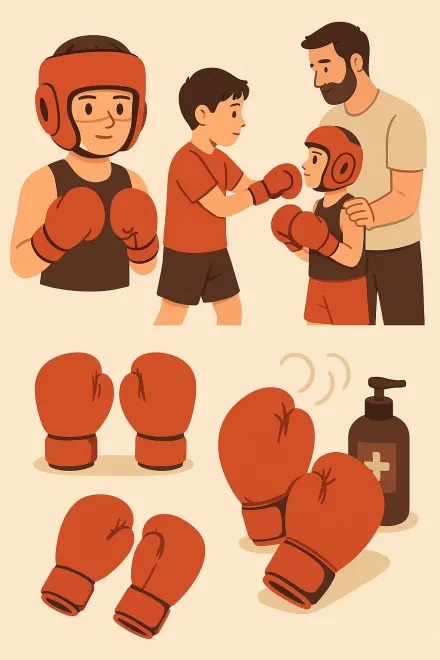
Tips for training boxing with kids safely
Practicing boxing in childhood can be very enriching as long as it is done under supervision and with proper equipment. Here are some key tips to ensure safe training:
- Protective gear: besides gloves, kids should use headgear, a mouthguard, and hand wraps.
- Progressive training: start with coordination and technique drills before moving to light sparring.
- Adult supervision: a coach or responsible adult should always guide the process and prevent unnecessary risks.
- Proper gloves: they should never be too heavy or too large, as that could cause injuries or demotivation.
- Hygiene and care: clean gloves after each use and air them out properly to avoid odors and bacteria.
A child who feels safe and comfortable while training will build a positive relationship with the sport, which can become a healthy long-term habit.
Frequently asked questions about kids' boxing gloves
What glove size does a 7-year-old need?
A 7-year-old typically uses gloves between 4 oz and 6 oz, depending on weight and hand size. These gloves offer the lightness needed so the child can train comfortably without straining the wrists or losing mobility. If training frequently, 6 oz is recommended for better protection.
Are kids' boxing gloves different from adult gloves?
Yes, children's gloves are specifically designed for smaller hands. They are lighter, have adapted padding, and more practical closures. Using adult gloves on a child can cause injuries and hinder learning proper technique.
Do kids need wraps under their gloves?
Yes, wraps are highly recommended even for kids. They help stabilize the wrists, protect the knuckles, and absorb sweat inside the glove. This extends the glove's lifespan and reduces the likelihood of injuries.
What materials are best for kids' boxing gloves?
For children, the most common and recommended options are synthetic leather or polyurethane, as they are durable, easy to clean, and more affordable than genuine leather. These materials are sufficient for regular use and ensure durability without a large investment.
At what age can kids start using boxing gloves?
Most academies allow children to start training between ages 4 and 6, always in a controlled environment with adapted activities. At this age, 4 oz or 6 oz gloves are the most suitable, always with adult supervision.
How often should a child's boxing gloves be replaced?
It depends on usage. If the child trains two or three times per week, gloves may last between 8 and 12 months. If you notice open seams, deformed padding, or persistent bad odors, it is time to replace them to ensure safety.
What is the difference between training and competition gloves for kids?
Training gloves are more padded and designed for bags and focus mitts, while competition gloves are lighter and tighter, intended for bouts. For most beginners, a training model will suffice, as it offers greater safety.