Boxing accessories
Last updated: May 29, 2026
How to choose the ideal women's boxing chest protector for your safety
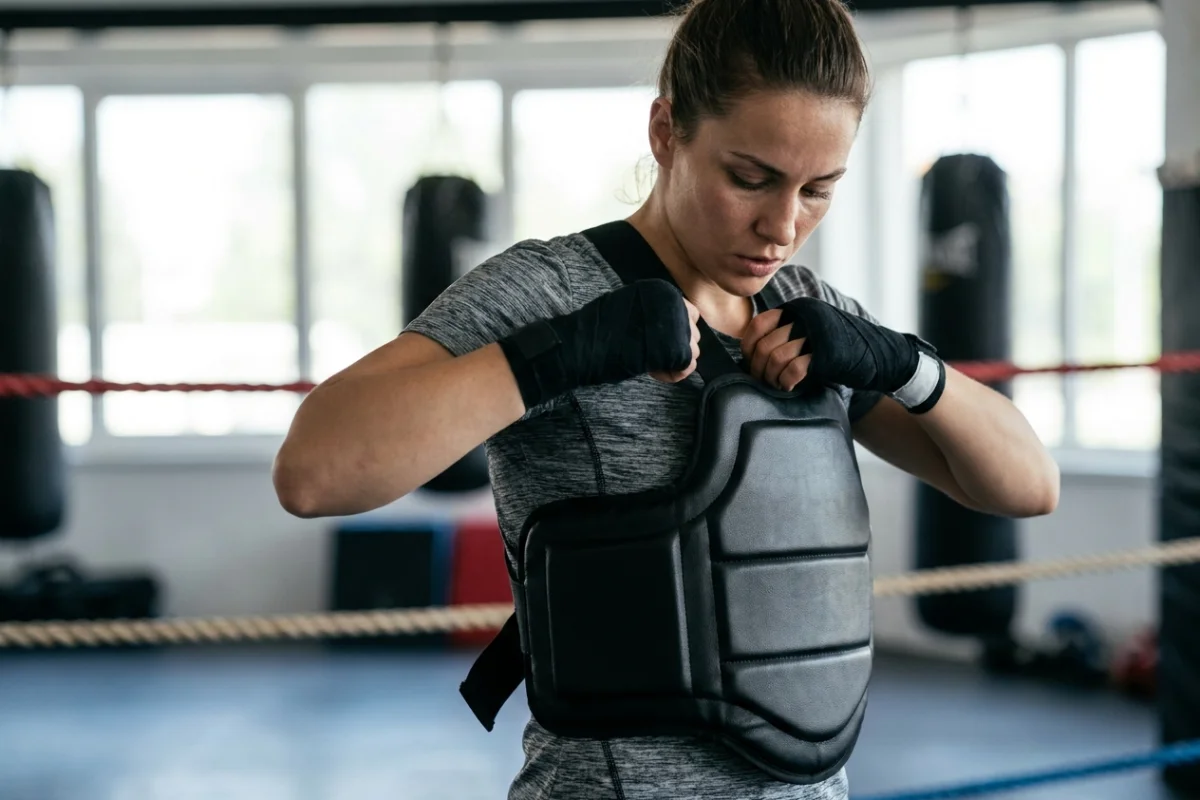
In contact sports, safety is the number one priority, and for women, having the right equipment is fundamental. Many practitioners focus on gloves or headgear, but choosing a women's boxing chest protector is a vital step to prevent injuries in an especially sensitive area during sparring and competition.
In this guide, you will discover how to choose the ideal chest protector according to your physiology, intensity level, and type of training. We will analyze the different protection systems, from individual cups to full chest guards, and the materials that offer the best balance between impact absorption and freedom of movement.
If you are looking for protection that gives you confidence without sacrificing comfort or agility, here you will find all the necessary information to make the right decision. You will learn how to identify the correct size and differentiate between approved models so that your only concern is perfecting your technique in the ring.
Why is the chest protector vital in women's boxing?
In boxing and other contact sports, safety is the fundamental pillar for optimal performance. For women, the chest protector is not just an optional accessory, but an essential piece of equipment designed to protect breast tissue and ribs from direct impacts that could cause painful injuries or long-term trauma.
Unlike male protectors, the female design must consider specific anatomy to offer efficient impact absorption without sacrificing mobility. A good protector distributes the force of the blow across the entire surface, minimizing localized damage and allowing the boxer to focus fully on her technique and strategy.
Choosing the right model not only guarantees physical integrity but also provides the necessary confidence to enter the ring. Feeling safe allows for greater freedom of movement and a more aggressive and decisive attitude during combat or training.
Types of protectors: Full vest or rigid cups?
There are mainly two configurations in the female chest protection market, and the choice depends largely on the intensity of training and personal preference regarding comfort.
1. Removable cup protectors
This system consists of a sports top made of elastic material that includes internal pockets to insert rigid plastic or polycarbonate cups. It is the preferred option for many due to its versatility; it allows using the top alone during warm-up and adding the rigid protection just before sparring. It offers very effective localized protection and is easy to wash.
2. Full protection vests
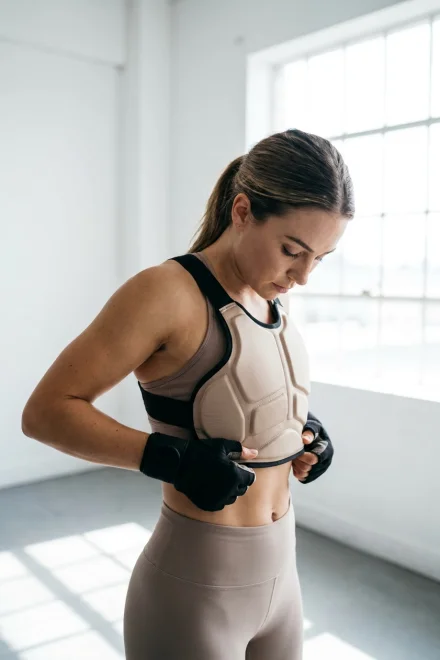
Full vests or chest guards cover a larger surface area, including the sternum area and, sometimes, part of the floating ribs. They are usually made of high-density foam or gel layers. They are ideal for beginners or for very intense training sessions where maximum coverage is sought, although they can be slightly warmer than the cup system.
3. Single-piece rigid protectors
Similar to a breastplate, these protectors are placed under the shirt and offer a solid and uninterrupted barrier. They are very common in official karate or taekwondo competitions, but are also used in boxing by those who prefer a uniform impact surface that prevents the blow from filtering between the cups.
Regardless of the type, the most important thing is that the material is resistant but flexible enough at the edges so as not to cause chafing on the skin during the constant movement of the arms.
How to find the perfect size and fit
The most common mistake is choosing a size based solely on conventional bra measurements. In boxing, the fit must be firmer to prevent the protector from shifting with impacts or sweat. A protector that moves can be more dangerous than wearing nothing, as the rigid edges could hurt the torso.
To measure yourself correctly, wrap a flexible measuring tape around your torso at the widest part of the chest. Always consult the manufacturer's size chart, as dimensions vary significantly between brands. The protector should fit snugly but allow for full chest expansion to breathe deeply during cardiovascular effort.
If you opt for the cup system, make sure they cover the entire breast tissue without leaving empty spaces. If you feel excessive pressure on the ribs or difficulty crossing your arms, you likely need a larger size or a model with a more ergonomic design.
Maintenance and durability of your equipment
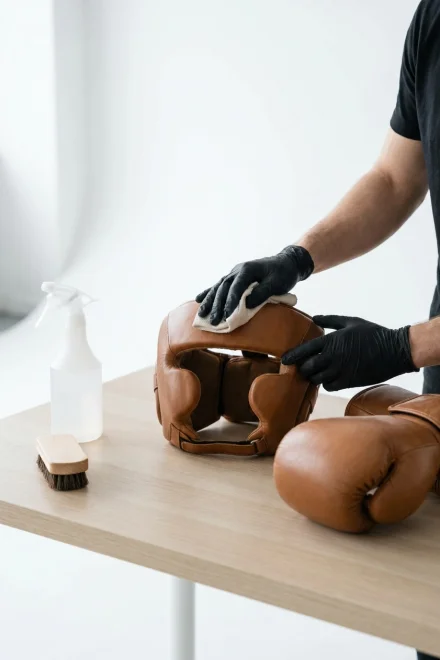
A well-cared-for chest protector can last several years, but it requires strict hygiene to avoid the accumulation of bacteria and bad odors derived from sweat. Most elastic tops can go in the washing machine, but the rigid parts must be cleaned by hand.
- Cleaning after each use: Wipe the rigid surfaces with a damp cloth with neutral soap or a specific disinfectant spray for sports equipment.
- Air drying: Never expose the protector to direct sunlight or heat sources such as radiators, as this can crack the plastic or degrade the foam.
- Regular inspection: Check for cracks in the cups or loss of elasticity in the bands. If the rigid material breaks, it must be replaced immediately.
- Storage: Do not store it compressed under other heavy equipment in your bag, as it could become permanently deformed.
Common mistakes when buying chest protection
Buying the first protector you find without analyzing its specifications can compromise your safety. One of the common failures is prioritizing aesthetics over functionality; an attractive design does not guarantee that the material is capable of absorbing a high-power blow.
Another mistake is ignoring breathability. Boxing is a high-intensity sport; if the protector does not allow heat to escape, it will increase your fatigue and you will quickly feel uncomfortable. Look for technical fabrics that manage moisture efficiently.
Finally, many athletes make the mistake of not testing the protector with the rest of their equipment. It is essential to verify that the chest protector is compatible with your mouthguard and that it does not interfere with a high guard. Shoulder mobility must be complete to be able to throw punches and block correctly.
Conclusion
Investing in a quality chest protector is investing in your sports career and your long-term health. It is not just about meeting a safety requirement, but about providing you with the peace of mind necessary to evolve as a boxer.
Remember that the best protector is the one you forget you're wearing once the fight starts. Take the time to measure yourself, compare materials, and choose the system that best fits your body and fighting style.
Your safety comes first: choose wisely and step into the ring with maximum protection.
Frequently asked questions about how to choose a women's boxing chest protector
Why is it necessary to use a chest protector in boxing?
Breast tissue is extremely sensitive and lacks its own muscular support. A chest protector absorbs and disperses the energy of impacts, preventing bruising, damage to Cooper's ligaments, and painful internal injuries during combat.
What types of chest protectors exist for women?
There are mainly two types: individual cup protectors (which are inserted into a special sports top) and one-piece rigid chest guards. The former offer more mobility, while the latter provide broader and more robust coverage.
How do I know what size protector I need?
You should base it on your usual bra size and chest circumference. It is essential that the protector is snug but does not restrict breathing. Most brands offer equivalence tables that combine cup size (A, B, C, D) with chest diameter.
Is it uncomfortable to train with a chest protector?
If you choose the right model, it shouldn't be. Modern designs are anatomical and lightweight. The key is to ensure that the edges do not rub against the armpits and that the inner material is breathable to prevent excessive heat buildup.
What materials are most recommended for protection?
For the rigid structure, polycarbonate or high-density plastics are ideal for their lightness and resistance. For the covering and support, look for technical fabrics such as elastic nylon or polyester with moisture-wicking properties.
Can any protector be used in official competition?
No. If you plan to compete, make sure the protector is approved by the corresponding federation (such as AIBA). These models are usually more discreet and comply with specific thickness and coverage regulations.
How is the protector correctly placed?
In insertion models, the cups should be centered over the chest within the top's compartments. In chest guard models, the straps should cross at the back to distribute the weight and prevent the protector from shifting upwards during movement.
What is the difference between a cup protector and a full chest guard?
The cup protector is more discreet and allows for greater trunk rotation, ideal for technical training. The full chest guard offers additional protection in the sternum and upper ribs area, making it preferable for intense sparring sessions.
How to clean and maintain the chest protector?
Plastic parts should be cleaned with a damp cloth and neutral soap after each use. The fabric top can be machine washed on a delicate cycle. It is vital to air dry the equipment (away from direct sunlight) to prevent bad odors and the degradation of the elastics.
When should the chest protector be replaced?
You should change it if you notice cracks in the plastic, if the straps have lost their elasticity, or if the inner padding has become deformed. A damaged protector does not distribute impacts correctly and loses its safety function.