Boxing accessories
Last updated: May 18, 2026
How to choose the ideal boxing reflex bar for your training
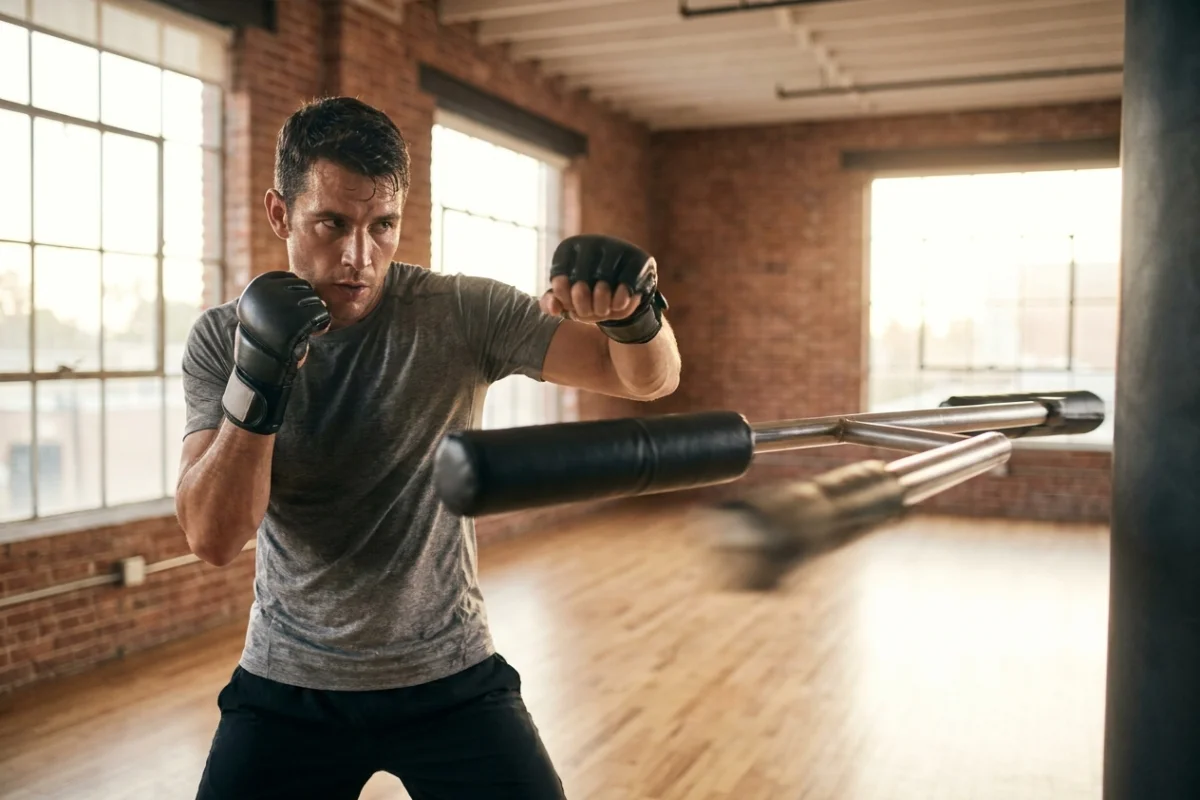
The boxing reflex bar, also known as a boxing reflex bar or spinning bar, has become one of the most effective tools for developing defense and coordination. Unlike traditional bags, this equipment forces the boxer to maintain an active guard and to work on waist movement constantly.
Choosing the right model can make the difference between a smooth workout and a frustrating one. Factors such as rotation speed, base stability, and bearing quality are decisive for the equipment to respond correctly to each impact.
In this guide, we will teach you how to choose the ideal reflex bar for your level and available space. We will analyze the different mounting types, the most durable materials, and the technical aspects that guarantee a real improvement in your reflexes and counter-attacking ability.
How to choose the ideal boxing reflex bar for your training
The boxing reflex bar, also known as a spinning bar, has become an indispensable tool for boxers of all levels. Its main function is to improve reaction speed, hand-eye coordination and, above all, defensive movements such as slips and blocks. When hitting the bar, it rotates at high speed, forcing the athlete to react immediately to avoid being hit.
These bars are designed with high-precision bearings that allow for a smooth and fast rotation. There are models that anchor to the wall and others that come integrated into a pedestal with a fillable base. The choice depends mainly on the available space and the intensity with which you plan to train.
In addition to technique, the reflex bar offers an excellent cardiovascular workout. Keeping up with the rhythm of the bar requires constant movement of the feet and torso, which burns a large amount of calories while perfecting your fighting style. It is a compact solution for those looking for a functional home gym.
However, not all bars are the same. It is vital to look at the quality of the materials, especially the padding of the bar and the durability of the rotating axis. A poor quality bar can become noisy or lose fluidity after a few sessions of intense use.
In conclusion: if you are looking to elevate your boxing level and work on defense dynamically, a reflex bar is one of the best investments you can make for your personal training equipment.
Wall bars vs. floor-based bars
When looking for a reflex bar, you will find two main formats: wall-mounted and pedestal. Wall bars are extremely stable and save floor space, making them perfect for garages or small gyms. They tend to be more robust and withstand more professional use.
On the other hand, floor-based bars (pedestals) offer the advantage of mobility. You can move them from one place to another and they usually include a small boxing bag or a speed bag at the top, offering a more complete workout. The base is filled with water or sand to ensure stability.
The choice between one and the other depends on your training environment. If you have a solid wall (brick or concrete), the wall-mounted one is superior in stability. If you live in a rented apartment or prefer not to drill, the pedestal model is your best option.
Regardless of the type, make sure the height is adjustable. A bar placed too high or too low will not allow you to practice slips realistically, which could negatively affect your fighting technique.
In summary, choose wall-mounted for maximum stability and durability, or pedestal for versatility and ease of installation without construction work.
Technical characteristics: bearings and materials
For a reflex bar to be effective, the most critical component is the bearings. These must be high-speed and preferably made of stainless steel to ensure that the bar rotates with the slightest touch and does not stop abruptly.
The material of the bar is also fundamental. Most are made of steel for the central axis, covered with high-density EVA foam or synthetic leather. This coating is vital to protect your hands and face from possible direct impacts during training.
Another aspect to consider is the adjustment system. Look for models that use robust safety knobs that do not loosen with the vibrations of the hits. A good adjustment system will allow you to share the equipment with people of different heights without complications.
Finally, the length of the bar is usually around 60-70 cm. A bar that is too long can be difficult to control in enclosed spaces, while one that is too short reduces the realism of a real opponent's reach.
Ultimately, prioritize bearing quality and padding to have a smooth, safe, and durable training experience.
Tips for mastering the reflex bar
🥊
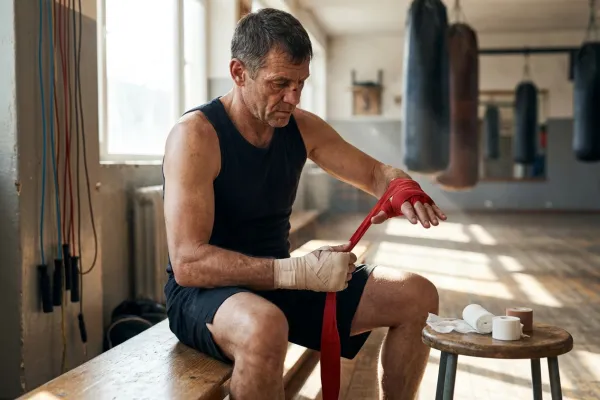
Always use hand wraps or inner gloves to protect your knuckles, even if the bar is padded.
👀
Keep your eyes forward, do not stare at the bar; use your peripheral vision to anticipate the rotation.
🛡️
Always keep your guard up. The bar will punish you if you drop your hands after punching.
📏
Adjust the bar to your shoulder height so that the slipping movement is realistic.
🔄
Do not hit with maximum force; the goal is rhythm and speed, not raw power.
👣
Work on your footwork. Move around the bar while it rotates to simulate a real fight.
🧘
Stay relaxed. If you are too tense, your reflexes will be slower and you will tire sooner.
⏱️
Train in 3-minute rounds, just like in a fight, to improve your specific endurance.
📉
Start slowly. Learn the trajectory of the bar first before trying to increase speed.
🧼
Wipe sweat off the bar after each session to prevent the synthetic material from cracking.
🔩
Periodically check the screws and anchors to ensure nothing has loosened.
💧
If you use a floor base, fill it with sand instead of water for much greater stability.
🚫
Do not allow children to use the bar without supervision, as the fast rotation can be dangerous for the inexperienced.
🔥
Combine the bar with other exercises like shadowboxing or jumping rope for a comprehensive workout.
What to choose according to your level and space
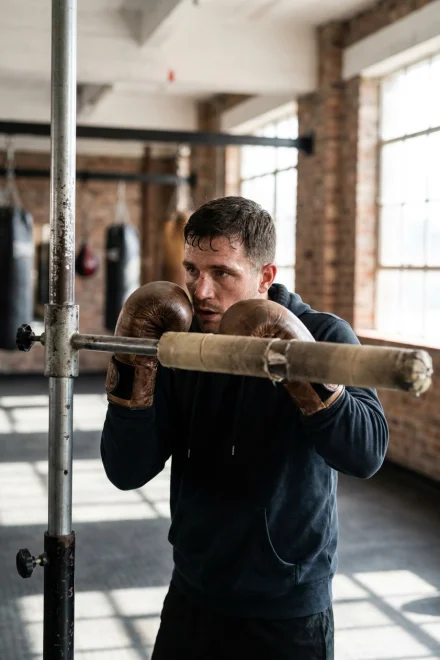
The choice of your boxing equipment should be aligned with your goals. If you are a beginner, a pedestal model with a floor base is usually more user-friendly, as it allows for easy height adjustment and does not require permanent installation at home.
For advanced or professional boxers, the wall-mounted bar is the preferred option. Its rigidity allows for working on power and speed combinations without the equipment shifting, more accurately simulating the resistance of an opponent who maintains their position.
If you have limited space, such as a hallway or a corner of your room, folding wall models are a marvel of modern engineering, allowing the bar to be tucked away when not in use.
Ultimately, consider the frequency of use. For daily and intense training, invest in a recognized brand with industrial bearings; the difference in the fluidity of movement will completely transform the quality of your session.
Equipment safety and maintenance
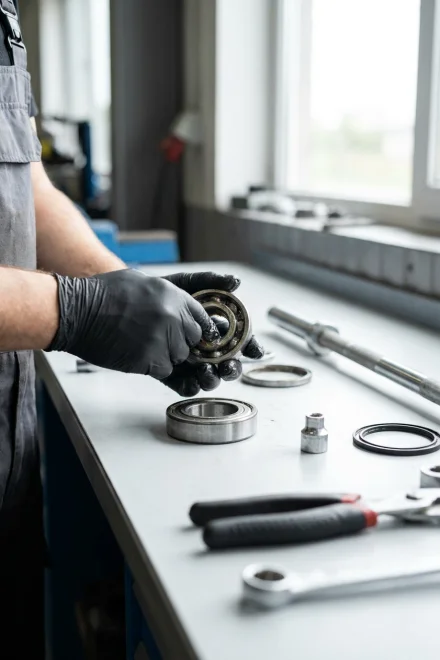
Keeping your reflex bar in optimal condition not only extends its lifespan but also ensures your safety. The most critical point is lubrication. Applying a small amount of silicone lubricant to the bearings every few months will keep the rotation quiet and fast.
It is essential to inspect the anchors. If the bar is wall-mounted, check that the wall plugs have not given way. If it is floor-based, make sure the base has no cracks. A structural failure during a hard hit could cause significant injury.
As for hygiene, sweat is corrosive. Cleaning the contact surface with a damp cloth and neutral soap will prevent bad odors and premature wear of the padding. Avoid aggressive chemicals that could damage the coating.
Remember: well-maintained equipment is safe equipment. Do not ignore strange noises or unusual vibrations; they are often signs that something needs adjustment or deep cleaning.
How to integrate the bar into your daily routine
It is not enough to have the best reflex bar; you have to know how to use it. An effective way to integrate it is to use it as a specific warm-up. Performing 2 light rounds will help wake up your reflexes and lubricate the shoulder joints.
During the main workout, you can use the bar to work on specific combinations. For example: throw a jab-cross, slip the returning bar, and counter with a hook. This type of exercise automates the defensive responses that you will later apply in sparring.
It is also excellent for final conditioning. Finishing your session with 3 minutes of uninterrupted movement in front of the bar will test your concentration when physical fatigue is at its peak, something vital in the final rounds of a fight.
Don't forget to vary the direction of your slips. Practice going under the bar (bob and weave) and also moving laterally. The versatility of the bar allows for working almost all defensive angles of modern boxing.
In conclusion, the reflex bar is much more than a toy; it is a personal trainer that forces you to be better, faster, and more aware of your guard every second of training.
Conclusion: boost your boxing with the ideal bar
Choosing the right boxing reflex bar can mark a before and after in your technique. Whether you opt for the stability of a wall-mounted model or the versatility of a pedestal one, the important thing is consistency in its use.
This equipment will not only make you faster, but it will also teach you the most important lesson in boxing: never take your eyes off your target and always keep your guard protected.
Analyze your space, your budget, and your goals, and choose the tool that motivates you to train every day with more intensity. It's time to improve those reflexes!
Frequently asked questions about how to choose a boxing reflex bar
What is a boxing reflex bar?
It is training equipment consisting of a horizontal padded arm that rotates 360 degrees on a vertical axis. Its goal is to force the user to dodge, duck, and counter-attack, simulating the rhythm of a real opponent.
Is a wall-mounted reflex bar or a floor-standing base better?
The wall-mounted bar saves space and is more stable, ideal for fixed gyms. The floor-standing bar is portable and usually includes an additional speed bag, making it more versatile for home training.
How important are the bearings in the bar?
The bearings are the heart of the equipment. High-speed bearings ensure that the bar spins smoothly and quickly after impact, allowing for a much more realistic and demanding reflex training.
What should the padding of the spinning bar be like?
It should be made of high-density foam covered in synthetic or genuine leather. Good padding protects your gloves and hands, but above all, it prevents head or body injuries if you fail to dodge the bar in time.
Can the height of the reflex bar be adjusted?
Yes, most quality models allow you to adjust the height. This is crucial so that the spinning arm is at the height of your shoulders or chin, adapting to different heights and types of training.
What weight should the base have if I choose a standing model?
To guarantee stability, the base must be able to be filled with water or sand, reaching at least 60-80 kg. If the base is too light, the structure will move with every strong hit, interrupting the rhythm of the exercise.
Does the reflex bar help improve punching?
It mainly improves precision and timing. Although it is not equipment for working on maximum power like a heavy bag, it is excellent for learning to punch immediately after a dodge.
Is the reflex bar noisy for use in an apartment?
Wall-mounted models are quieter. Floor-standing models can generate vibrations on the floor. It is recommended to use a protective mat under the base to muffle the sound and prevent it from sliding.
What maintenance does this equipment require?
It is essential to lubricate the bearings periodically to maintain the smoothness of the rotation and check that the adjustment screws do not loosen due to the constant vibrations of training.
Is it suitable for boxing beginners?
Yes, although it requires patience. Beginners should start with soft punches to understand the rotation rhythm before increasing speed, making it a magnificent tool for mechanizing a high guard.