

Boxing accessories
Last updated: April 24, 2026
How to choose the ideal boxing interval timer for your workouts
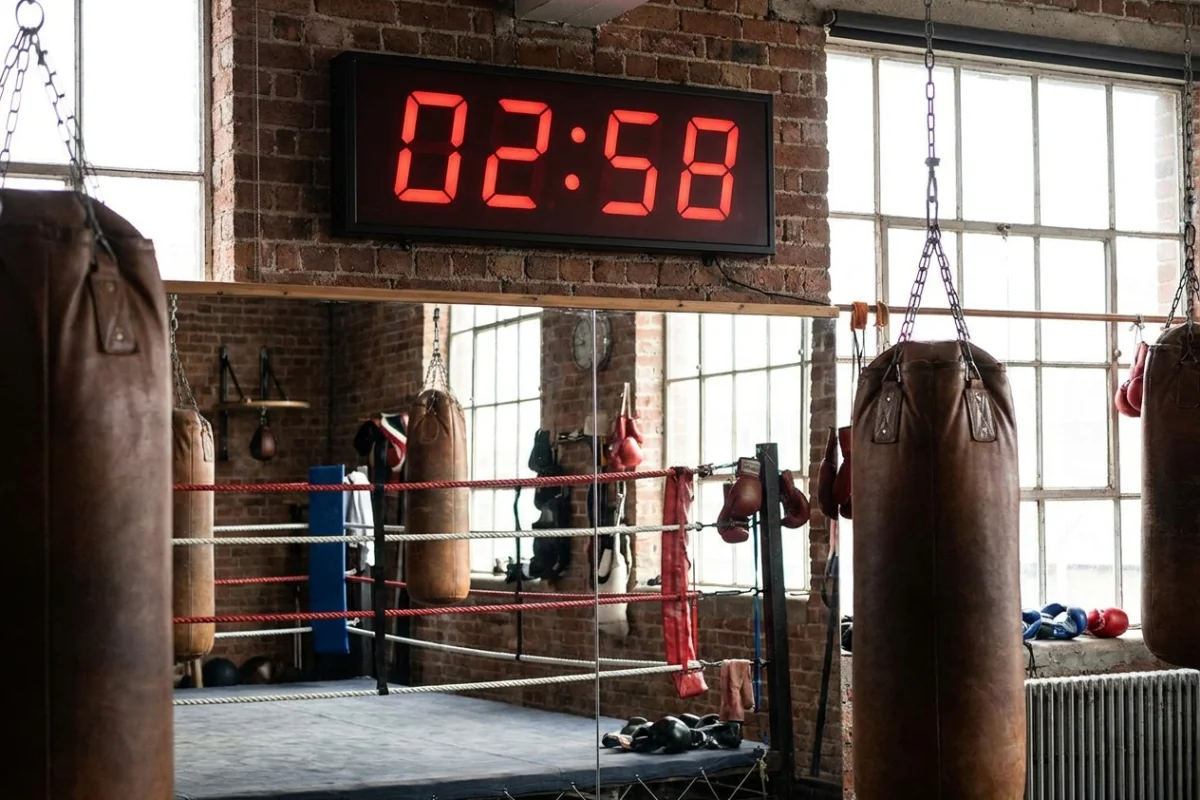
In boxing, timing is everything. Precisely controlling the duration of rounds and recovery periods is fundamental to improving cardiovascular endurance and tactical discipline. Many athletes make the mistake of using impractical mobile apps, when a professional interval timer can completely transform the session dynamics.
In this guide, you will learn how to choose the ideal boxing interval timer according to your training environment, whether it's a commercial gym or a personal home space. We will analyze the essential functions, from acoustic signals to the programmability of rest periods.
If you are looking to maximize your performance and train like a professional, having a timer that offers visibility, precision, and ease of use is key. Here you will find the necessary criteria to invest in the tool that will set the pace of your progress in the ring.
Why is an interval timer essential in boxing?
In boxing, time is a determining factor. An interval timer is not just a clock; it is the tool that dictates the rhythm, intensity, and discipline of each session. Whether you are shadow boxing, hitting the heavy bag, or sparring, having a device that accurately marks rounds and rest periods is fundamental for progress.
Using a specific timer allows the boxer to focus exclusively on technique and physical effort, eliminating the distraction of having to constantly look at the clock. Additionally, it helps simulate real fight conditions, preparing the body and mind for official competition times.
Good interval training improves cardiovascular capacity, anaerobic endurance, and recovery. Therefore, choosing the right equipment is the first step to transforming a chaotic workout into a professional and structured routine.
Types of timers for boxing training
Depending on your training location and your specific needs, there are different timer formats that may better suit your routine. Knowing the available options will help you make a smart investment.
1. Wall Timers (Gym)
These are the standard devices in high-performance centers. They are usually large, with high-visibility LED screens and powerful speakers. They are ideal if you train in a large space or with more people, as they allow everyone to follow the same round rhythm without difficulty.
2. Portable and Pocket Timers
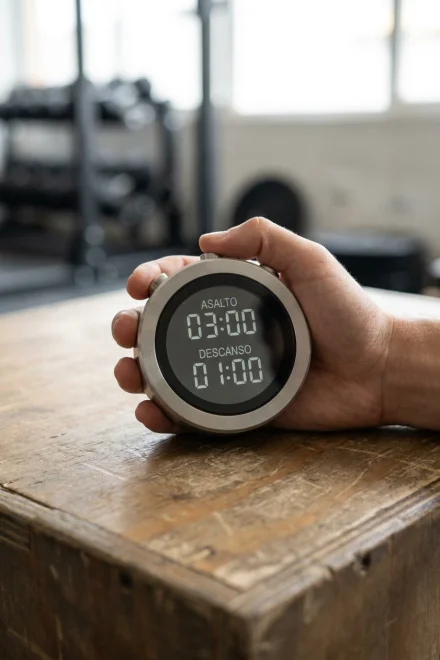
These devices are compact and often include belt clips or magnets to attach them to metal structures. They are perfect for boxers who train at home, in parks, or who travel frequently. Despite their size, they offer professional interval programming features.
3. Wrist Timers
Although less common for traditional boxing due to the use of gloves, they are useful for fitness conditioning and running workouts. Some specific models allow vibrations instead of sounds, which is useful in very noisy environments.
4. Mobile Applications
There are numerous free and paid apps that transform your smartphone into a boxing timer. They are an economical and accessible solution, although they have limitations in terms of sound volume and device durability against potential hits or sweat.
Each option has its advantages, but the most important thing is that the chosen device is reliable and easy to set up so as not to waste valuable time in your session.
Professional timers vs. mobile apps
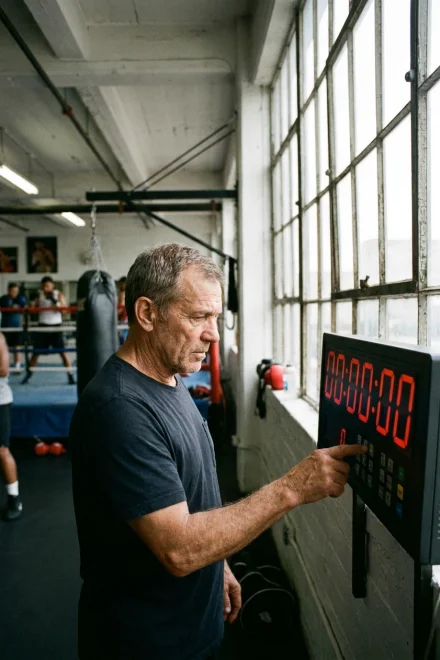
The question often arises whether it is necessary to buy a dedicated device or if a mobile app is enough. The answer depends on your level of commitment and the training environment. A professional timer offers durability and acoustic power that a phone can hardly match, especially in environments with music or constant hitting.
Apps are excellent for beginners or individual training in silence, but they lack the robustness needed for daily use in a gym. Additionally, using a physical timer avoids distractions such as message notifications or calls that can interrupt your workflow.
If your goal is to train with maximum seriousness, investing in a specific interval timer guarantees you a tool designed exclusively to withstand the demands of boxing, with large buttons that you can manipulate even with wrapped hands.
How to set up your intervals to improve performance
Time configuration is as important as the exercise itself. To get the most out of your timer, you must adapt the intervals to your current level and your specific competition or fitness goals.
- Standard rounds: Set periods of 3 minutes of work by 1 minute of rest to simulate professional boxing.
- Speed training: Reduce rounds to 2 minutes with 30-second rests to increase cardiovascular intensity.
- End-of-round warnings: Program an acoustic signal 10 or 30 seconds before time runs out to perform a final 'sprint' of punches.
- High-Intensity Interval Training (HIIT): Use the timer for short periods of 20 seconds of maximum explosiveness followed by 10 seconds of active recovery.
Remember that consistency in rest times is what really builds endurance. Do not manually extend rests; let the timer dictate when it is time to get back into action.
Common mistakes when choosing an interval timer
Buying the first timer you find can lead to frustration during training. One of the most common mistakes is ignoring sound power; in a gym with bags hitting and music, a weak beep will be totally useless.
Another frequent failure is choosing models with overly complex interfaces. In boxing, you need to be able to change settings quickly and easily. If it takes you five minutes to program an interval session, you will end up not using the device.
It is also important to consider the power source. Models that only run on batteries can fail at the most inopportune moment. Look for options that allow connection to the power grid or that have long-lasting rechargeable batteries with a low charge indicator.
How to avoid them: Read reviews about speaker volume, look for videos of the interface operation, and make sure the digit size is sufficient for the distance at which you will be training.
Conclusion
The interval timer is the conductor of your boxing training. Choosing the right model will allow you to optimize every minute in the gym, improve your endurance, and maintain iron discipline in your routines.
Whether you opt for a robust wall model or a versatile portable timer, make sure it meets the visibility and sound requirements that your environment demands. Investing in a good time measurement tool translates directly into an improvement in athletic performance.
Do not leave your progress to chance; control your times and you will see how your fighting ability reaches a new level.
Frequently asked questions about how to choose a boxing interval timer
Why is an interval timer better than using a mobile phone?
A specific timer offers greater visibility from a distance, powerful acoustic signals that can be heard over hitting, and greater durability. Additionally, it avoids notification distractions and allows for faster handling with gloves or wrapped hands.
What basic functions should a boxing timer have?
It must allow you to configure the round duration (usually 2 or 3 minutes), the rest time (30 or 60 seconds), and the total number of rounds. It is also vital that it includes a warning signal for the last 10 seconds of the round.
Is a wall timer or a portable one better?
The wall timer is ideal for gyms because all users can see it. The portable one is excellent for individual outdoor training or if you need to take your equipment with you, although they usually have smaller screens.
How important is the volume of the acoustic signal?
It is crucial. In a gym with bags hitting and music, you need a timer with a high-decibel buzzer. Some models allow you to adjust the volume or even connect external speakers to ensure no one misses the start of the round.
How does screen visibility influence the choice?
You should choose one with high-contrast LED digits. If you train in a large space, look for numbers at least 10 cm high. Differentiated colors (for example, green for work and red for rest) help identify the training status at a glance.
Are there timers with pre-configured programs for boxing?
Yes, advanced models include modes for Professional Boxing, Amateur, and MMA. This makes setup easier without having to manually program each time, saving valuable time during warm-up.
What type of power supply is more recommended: batteries or mains power?
For fixed installations, a mains power connection is preferable to prevent the timer from turning off mid-session. Battery-powered or rechargeable models are better for mobility, but require keeping an eye on the charge level.
Is it necessary for the timer to have a remote control?
It is highly recommended, especially for wall timers. The remote control allows you to pause, restart, or change the training mode without having to interrupt the flow of the class or climb a ladder.
What is the 'preparation time' function?
It is a short interval (usually 10 seconds) that passes before the first round begins. It allows you to put in your mouthguard, adjust your gloves, and position yourself in front of the bag before the initial bell rings.
How durable should a gym timer be?
It must have a robust casing, preferably made of metal or high-resistance ABS plastic, to withstand vibrations and possible accidental impacts if used near hitting areas.