
Boxing accessories
Last updated: May 8, 2026
How to choose boxing resistance bands to improve your power and speed
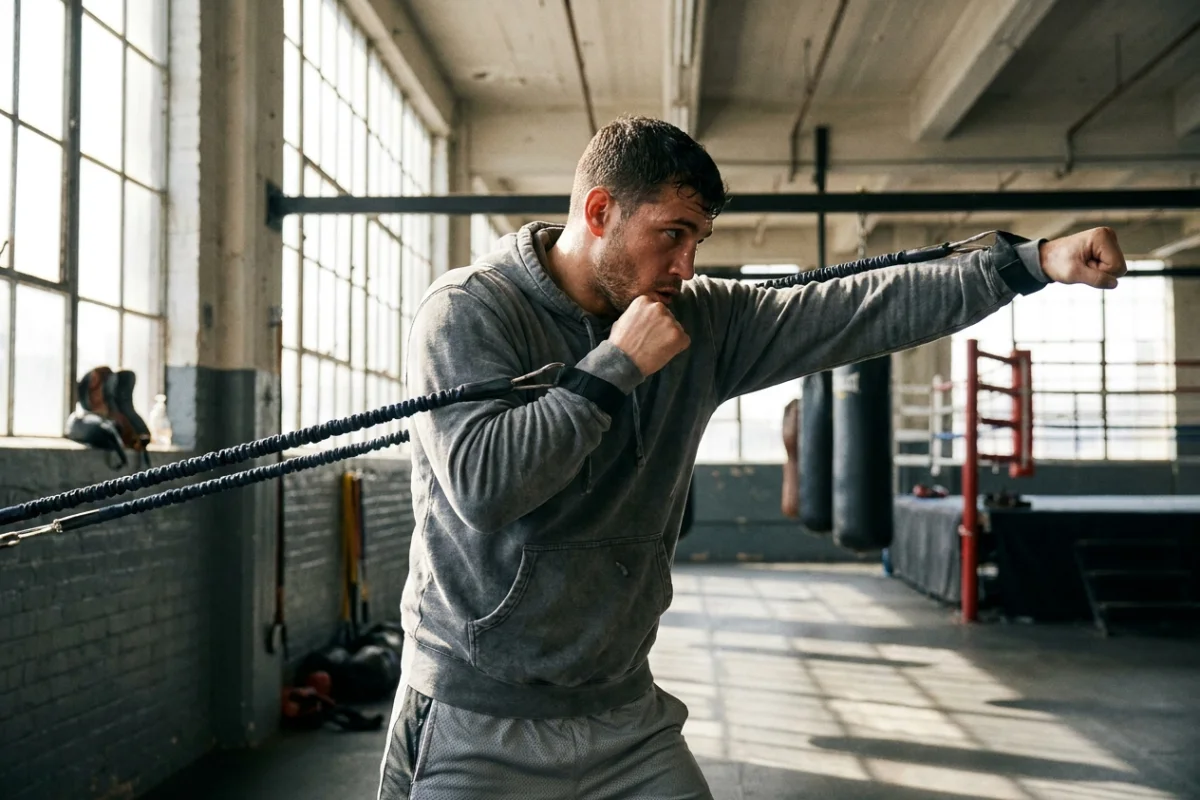
In modern boxing, brute force isn't everything; explosiveness and speed are what make the difference between a punch that connects and one that misses. Resistance bands have become an essential tool for fighters looking to take their performance to the next level without relying exclusively on traditional weights.
Choosing the right equipment can be confusing due to the variety of tensions, grips, and materials available. Factors such as your experience level, body weight, and specific goals (whether improving footwork or hand speed) will determine which type of band is most effective for your daily training.
In this guide, you will learn how to choose the boxing resistance bands that best suit your needs. We will analyze the different anchoring systems, recommended tension levels, and how this accessory can transform your shadowboxing technique and punching power safely and efficiently.
How to choose boxing resistance bands to improve your power and speed
In modern boxing, brute force isn't everything; the ability to transmit that force explosively is what defines a great puncher. Resistance bands have become an indispensable tool for fighters of all levels looking to optimize their punch and agility. However, choosing the wrong equipment can lead to poor technique or even joint injuries.
When looking for boxing bands, it is vital to understand that not all serve the same purpose. Some models are designed specifically for 'shadow boxing', while others focus on lateral movement or leg power. It's not just about how much resistance they offer, but how they integrate with the body's natural movement during striking.
In this article, we will analyze the key factors so that your choice translates into a real improvement in the ring, avoiding the most common mistakes when purchasing this type of sports equipment.
Benefits of training with resistance bands in boxing
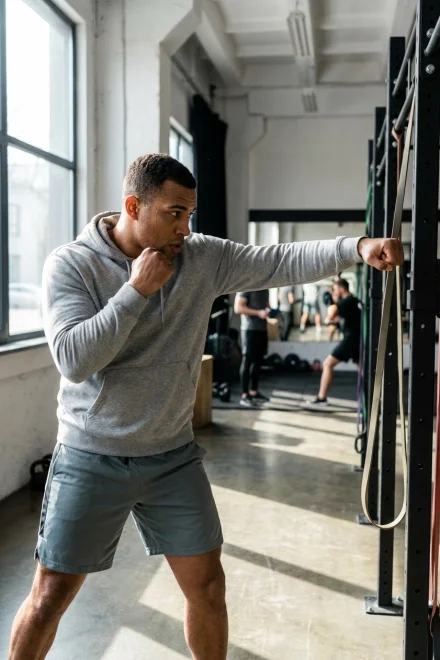
The use of elastic bands in combat training offers competitive advantages that traditional weights cannot replicate. The main one is progressive resistance: the further the arm is extended in the punch, the greater the load, forcing the muscles to work at their maximum at the point of impact.
One of the greatest benefits is the improvement of retraction speed. Many boxers focus on throwing the punch, but forget that returning to the guard quickly is vital. The bands pull the arm back, helping the neuromuscular system to mechanize that fast return.
Additionally, these tools foster a better body structure. By fighting against the band's tension, the boxer is forced to keep the core contracted and use hip rotation to generate power, instead of relying solely on the shoulders. This translates into heavier and more stable punches.
Finally, they are ideal for strengthening the rotator cuffs and other stabilizing muscles. By working with a dynamic and flexible load, the dry impact on the joints is reduced, which helps prevent typical boxer's shoulder and elbow injuries.
Risks and common mistakes when using elastic bands
Although they are safe tools, negligent use of resistance bands can compromise your progress. The most serious error is sacrificing technique for tension; using a band that is too hard usually causes the boxer to 'push' the punch instead of throwing it, ruining the mechanics of the movement.
Material wear and tear is another significant risk. Latex bands can develop micro-cracks that, under tension, cause sudden breaks. It is essential to check them before each session to avoid accidental snaps.
Training exclusively with bands can create a false sense of distance. By feeling constant tension, the brain can confuse the actual reach of the arm. Therefore, they should always be combined with heavy bag and mitt sessions without resistance.
Finally, incorrect anchoring (especially in bands that go to the back or waist) can cause skin chafing or excessive pressure on the lumbar vertebrae if the harness is not well padded.

How to choose your bands according to the type of training
Depending on which aspect of your boxing you want to boost, you should opt for one band system or another. Versatility is key, but specialization dictates the results.
🥊 Shadow Boxing
Requires bands that attach to the back or via a shoulder harness. They should be light and allow full arm extension to work on fluidity and aerobic endurance.
⚡ Explosivity and Power
High-tension bands anchored to a fixed point (wall or post) are recommended. Ideal for working on isolated punches or short bursts of maximum intensity.
👣 Footwork
Short bands placed on the ankles. They are fundamental for strengthening the abductors and improving stability in lateral movements and pivots.
🏋️ Full Body Training
Systems that connect hands, feet, and waist simultaneously. They are demanding and serve for general physical conditioning, simulating the actual fatigue of a fight.
🛡️ Rehabilitation and Warm-up
Low-resistance circular bands (mini-bands). Their goal is not power, but to activate the shoulder musculature before hitting the bag.
Remember that the quality of the grips is as important as the band itself. Always look for steel carabiners and ergonomic handles that do not slip with sweat.
Practical tips for training with boxing bands
🔥
Never start with maximum resistance; always perform 3 minutes of free shadow boxing to warm up the joints.
📉
Use progressive resistance: start the round with bands and take them off in the last minute to feel the real lightness and speed.
🧘
Maintain a correct posture; if the band forces you to lean forward, reduce the tension immediately.
🧼
Clean the sweat off the bands after each use; the salinity of the sweat can crystallize the latex and cause it to crack.
⏱️
Do not overdo the time; sessions of 15 to 20 minutes with bands are enough to avoid overloading the nervous system.
Types of resistance systems for boxers
Shadow boxing bands with back harness
This is the most popular system. It consists of a harness worn like a backpack or a lumbar belt, from which two elastics extend to the hands. Its goal is to add load to straight punches (jab and cross). It is excellent for improving shoulder endurance, allowing the boxer to keep their hands up even under extreme fatigue.
When choosing this model, it is crucial that the band does not rub against the armpits, as during a long session it can cause friction burns. High-end models include neoprene sleeves to avoid this problem.
Fixed anchor bands
Unlike the previous ones, these hook onto a wall or post. The boxer stands with their back to the anchor and throws punches. This system allows for much higher tension and is ideal for working on explosive starts. They can also be used facing the anchor to work the back muscles and improve the arm's recovery speed after impact.
Integral systems (Full Body Resistance)
These are complex kits that connect wrists and ankles to a central belt. Although they are more difficult to put on, they offer an unparalleled metabolic workout. They force the boxer to fight against resistance in every step, every slip, and every punch, simulating the feeling of heaviness that occurs in the final rounds of a real fight.
In conclusion, the choice depends on your current level and your specific goals. A beginner should start with light shadow boxing bands, while an advanced competitor will get more out of fixed anchor or integral systems.
Comparison of boxing resistance systems
| System Type | Main Objective | Tension Level | Ease of Use | Ideal for | Approximate Price |
|---|---|---|---|---|---|
| Back Harness | Endurance and Speed | Medium | High | Daily Shadow Boxing | 25 € – 50 € |
| Fixed Anchor | Explosive Power | High | Medium | Strength training | 15 € – 40 € |
| Integral Kit | Total Conditioning | Variable | Low | Fight preparation | 60 € – 120 € |
Frequently asked questions about how to choose boxing resistance bands
What benefits do resistance bands bring to boxing?
Bands provide progressive resistance, meaning the tension increases as you extend the punch. This strengthens stabilizer muscles, improves arm retraction speed, and increases explosive power without the joint impact of weights.
How do I choose the right resistance level?
For beginners, low resistance (light) bands are recommended to prioritize technique. Advanced boxers can opt for medium or high resistance. Ideally, the band should allow you to complete the full range of the punch with clean technique, without distorting the movement.
Is a harness system or individual bands better?
Harness systems that attach to the back and wrists are ideal for shadowboxing and improving hand speed. Individual bands with wall or post anchors are better for static power exercises and core rotation.
What material is most durable for boxing training?
Natural latex offers the best elasticity, but fabric-covered (nylon) bands are safer and more durable, as they protect the elastic from sweat and friction and prevent the band from snapping back at you if it breaks.
Can I use resistance bands to improve footwork?
Yes, there are specific bands for the ankles. These help strengthen the abductors and improve lateral agility, allowing for faster and more stable movement inside the ring.
How does the length of the band influence training?
The length should allow for full arm extension. If the band is too short, it will limit your reach and could cause injury; if it is too long, it won't offer resistance in the initial phase of the punch. Look for adjustable models or those specific to your height.
Are resistance bands safe for the shoulders?
They are generally safer than dumbbells for shadowboxing, as the resistance is linear and controlled. However, it is vital to warm up the rotator cuffs before using them to avoid strain from constant tension.
How should I care for my resistance bands?
Clean them with a damp cloth to remove sweat, avoid exposing them to direct sunlight for long periods, and check them regularly for small cracks or cuts that could compromise their structural integrity.
What is the difference between tube bands and flat bands?
Tube bands usually come with handles or carabiners, making them more versatile for strength training. Flat bands are lighter and more comfortable for mobility exercises and specific joint warm-ups.
Can I combine bands with other boxing equipment?
Absolutely. Many trainers combine the use of bands with the heavy bag to work on power transfer, or use them during mitt work to force the boxer to keep their guard up due to the recoil tension.