
Last updated: April 2, 2026
How to choose the ounces of your boxing gloves according to your weight and goal
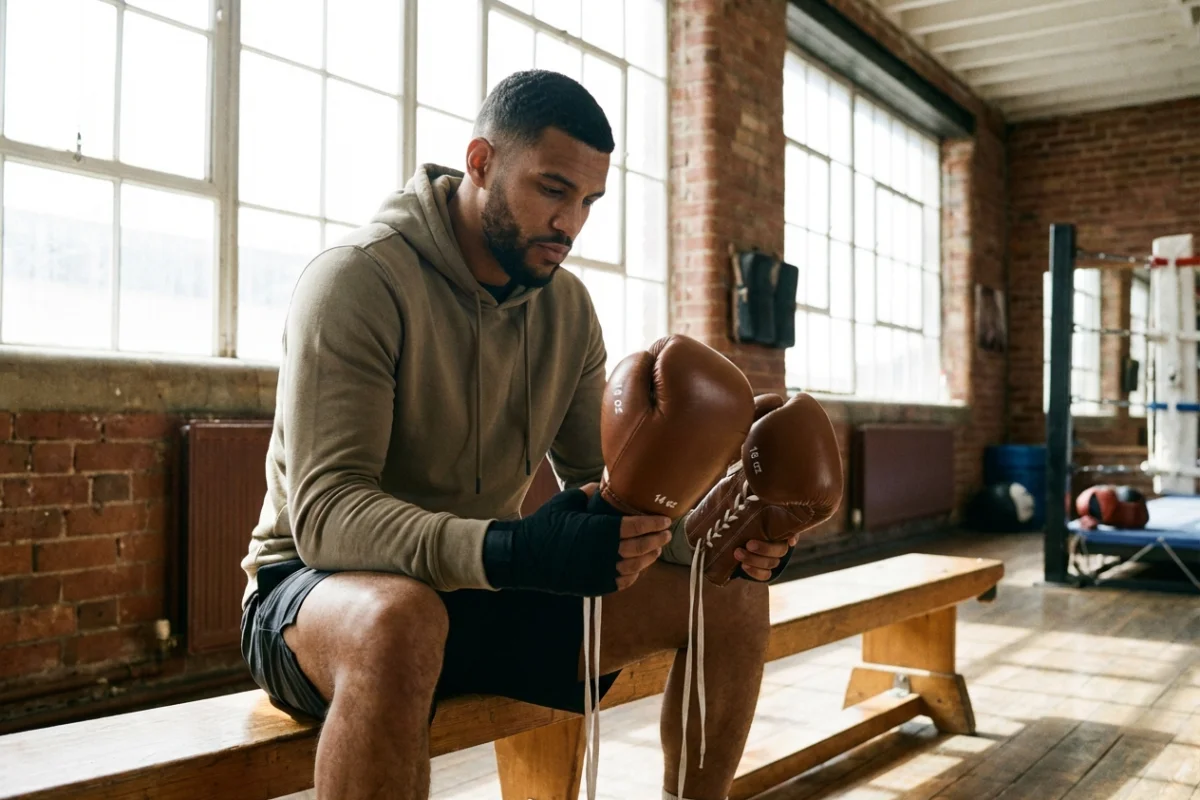
Choosing the right weight for your gloves is essential to protect your hands and your training partners. Ounces (oz) not only determine the physical weight of the equipment but also the level of padding and impact absorption capacity they offer during striking.
In this guide, you will learn how to choose the ounces of your boxing gloves based on your body weight and the type of training you perform. Whether you are looking for gloves for bag work, focus mitts, or participating in intense sparring sessions, the right choice is key to avoiding long-term injuries.
We will analyze the differences between the most common weights, from 10 to 16 ounces, so you can find the perfect balance between speed, protection, and power. With this information, you can equip yourself like a professional and ensure that your progression in the ring is safe and effective.
How to choose the ounces of your boxing gloves according to your weight and goal?
Choosing the right size of boxing gloves is not a matter of conventional size, but of ounces (oz). Ounces represent the weight of the glove and, most importantly, the level of protection and padding they offer for both your hands and your training partner. An incorrect choice can lead to joint injuries or inefficient training.
The weight of the glove directly influences impact absorption. The higher the number of ounces, the more padding the glove has, which makes it heavier but also safer. Conversely, gloves with few ounces are lighter and allow for greater speed, but offer minimal protection. In this guide, we will teach you how to identify which ones you need according to your body weight and the type of training you do.
In summary, low ounces are designed for competition or speed work, while high ounces are the standard choice for daily training and sparring, guaranteeing that physical integrity is always the priority in the ring.

The importance of body weight in the choice
The general rule for choosing gloves is mainly based on the athlete's weight. This is because a heavier person generates more force on impact and, therefore, requires a greater amount of padding to dissipate that energy and protect the bones of the hand.
Using a glove that is too light for your body weight can cause the padding to compress excessively, leaving your knuckles exposed to direct impacts against the bag or the opponent. On the other hand, an excessively heavy glove for a light person can make it difficult to learn the correct technique and fatigue the shoulders prematurely.
It is fundamental to understand that the inner padding not only protects the one hitting, but is the safety barrier for the partner. Therefore, in most gyms there are strict regulations on the weight of the gloves allowed according to the boxer's weight category.
- Proper protection for metacarpals and wrists.
- Prevention of cuts and bruises on the partner.
- Development of muscular endurance in the shoulders.
- Improvement of hitting technique by having the correct weight.
- Greater durability of the equipment by not overloading the padding.
Differences according to the goal: Bag vs. Sparring
Not only does your weight matter; the goal of your training is decisive. If you are going to hit the bag or the pads, you can opt for gloves with denser padding and intermediate ounces (10-12 oz) to work on technique and speed. However, for sparring (training combat), safety is the absolute priority.
In sparring, 14 oz or 16 oz gloves are usually used, regardless of the boxer's weight in many cases, so as not to hurt the partner. A larger glove distributes the blow over a larger surface and has softer padding. In addition, training with heavy gloves is an excellent physical conditioning strategy, as it strengthens the arms so that, on competition day, the official gloves feel extremely light.
- Bag and mitts: Protection and strike response are sought.
- Sparring: Maximum cushioning and mutual safety are sought.
- Competition: Low ounces (8-10 oz) to maximize damage and speed.
- Conditioning: High ounces to gain power and endurance.
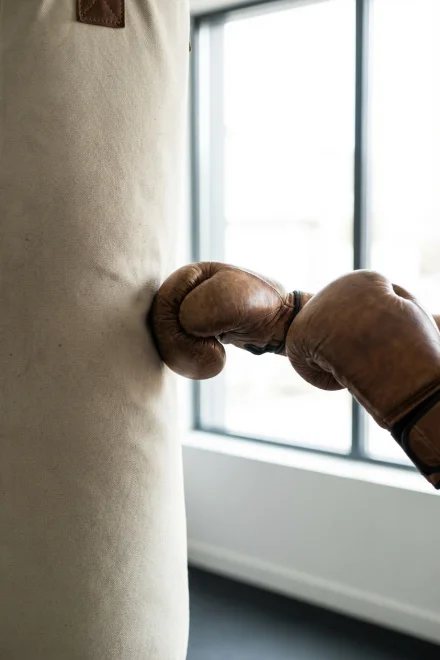
Recommended ounce guide according to your profile
To make your choice easier, we have prepared a breakdown based on international boxing standards. Remember that these recommendations may vary slightly depending on the brand of the glove and the specific instructions of your coach.
🥊 8 to 10 Ounces (Competition)
These are the gloves used in professional and amateur light weight bouts. They have very little padding, which allows all the force of the impact to be transmitted. They are not recommended for daily training due to the risk of hand injuries.
🥊 12 Ounces (General Training)
It is the ideal size for women and light weight men (less than 70 kg) who do bag and mitt work. They offer a perfect balance between protection and lightness to improve execution speed.
🥊 14 Ounces (Multipurpose Use)
The most common glove for daily training for medium weight people (70-85 kg). It is safe enough for light sparring and light enough not to exhaust the boxer during bag work.
🥊 16 Ounces (Sparring and Heavyweights)
It is the mandatory standard for sparring in most gyms. Its large volume of padding protects the partner to the maximum. It is also the necessary option for boxers who exceed 85-90 kg in weight.
🥊 18 to 20 Ounces (Special Training)
Mainly used by large heavyweights or by those looking for extreme strength training. They offer the maximum protection possible in today's market.
Choosing the correct ounces will not only make you a better boxer, but will prolong your sporting life by avoiding chronic injuries to the wrists and knuckles. If you have doubts, the safest option will always be to opt for a couple of ounces more than you think you need.
Practical tips for using your gloves
Always use boxing wraps under your gloves; these take up space and affect the final fit of the ounces.
Ventilate your gloves after each session. Accumulated sweat degrades the internal padding and alters the actual weight of the glove.
If you are between two weights, choose the higher one. It is better to train with a little more weight than to risk an injury due to lack of protection.
Consult with your sparring partner. It is a common courtesy rule to agree on the use of 14 oz or 16 oz before getting into the ring.
Renew your gloves when you feel the padding is soft or deformed, regardless of the ounces marked on the label.
Conclusion: Safety is the key to success
In short, the choice of the ounces of your boxing gloves should be a thoughtful decision that combines your body weight with the type of activity you are going to perform. Don't be swayed only by aesthetics or color; a 10 oz glove may look more professional, but if your goal is daily sparring and you weigh 80 kg, you will be putting your health and that of your partners at risk.
For a beginner, 12 oz or 14 oz gloves are usually the best initial investment, as they allow for almost all facets of training to be performed safely. As you progress and define your style, you can purchase specific 10 oz gloves for the bag or 16 oz for intense sparring.
Remember that boxing is a sport of consistency. Having the right equipment, adjusted to your real needs, will allow you to train with confidence, improve your punching power and, above all, enjoy every round while minimizing the risk of injuries.
Frequently asked questions about ounces in boxing gloves
What exactly do ounces (oz) mean in boxing?
Ounces represent the weight of the glove and, by extension, the amount of protective padding it contains. The higher the number of ounces, the more padding the glove has, which offers greater protection for both the boxer's knuckles and the opponent.
What ounces should I use if I weigh less than 65 kilos?
For people of light build (less than 65 kg), it is common to use 10 to 12-ounce gloves for general training. However, if you are going to spar, it is recommended to go up to 14 ounces to ensure your partner's safety.
What are the best ounces for sparring?
The standard for sparring is usually 14 or 16 ounces. These gloves are heavier and bulkier, which reduces impact speed and maximizes cushioning, minimizing the risk of cuts or injuries during the exchange of blows.
What gloves are recommended for hitting the heavy bag?
For bag work, 12 or 14-ounce gloves are typically used. It is important that they have good padding to absorb the vibration of constant impact against a dense surface, thus protecting the wrist joints and metacarpals.
Can I use 10-ounce gloves for daily training?
10-ounce gloves are ideal for mitts and speed, but they may be insufficient in protection if you hit the bag with a lot of power or if your body weight is high. For versatile daily training, 12 or 14 ounces are safer.
What ounces are used in professional competitions?
In professional boxing, lightweights usually compete with 8-ounce gloves, while welterweight categories and up use 10 ounces. These are gloves with much less padding designed to maximize impact damage.
Does hand size influence the choice of ounces?
Although ounces measure weight, generally a glove with more ounces has a wider internal compartment. If you have very large hands, you may need 14 or 16 ounces simply for fit and physical comfort.
What ounces should children use in boxing?
For children and young beginners, 6 or 8-ounce gloves are recommended. They are light enough so they don't affect their striking technique or excessively fatigue their shoulders, while maintaining adequate protection for their strength.
Is it better to train with heavy gloves to gain speed?
Training with 16-ounce gloves helps strengthen the shoulders and improve endurance. When you later switch to lighter competition gloves, you will notice greater speed and fluidity in your hands due to the previous conditioning.
How do I know if my current gloves have the correct ounces?
If after training you feel pain in your knuckles or wrists, you likely need more ounces (more padding). If, on the other hand, you feel that your arms tire too quickly without having hit much, you might be using excessive weight for your current level.