
Boxing accessories
Last updated: April 2, 2026
How to choose the ideal boxing mouthguard for your safety

Choosing a suitable mouthguard is as crucial as selecting good gloves. In boxing, protecting your teeth, gums, and jaw is not optional; it is a fundamental safety measure to avoid serious injuries. Many practitioners underestimate the importance of a good fit, which can lead to discomfort or, even worse, ineffective protection against an impact.
In this guide, you will discover how to choose the ideal boxing mouthguard according to your level of practice and specific needs. We will analyze the different types available on the market, from standard models to custom ones, and we will show you the key points to identify a perfect fit.
If you are looking for a protector that combines breathability, shock absorption, and durability, here you will find all the necessary information to protect your smile in the ring. With these tips, you will learn to differentiate between a basic accessory and a professional protection tool.
Why is choosing a good boxing mouthguard vital?
The mouthguard is, without a doubt, one of the most critical pieces of equipment for any boxer. Its primary function is not only to protect the teeth from potential fractures but also to cushion impacts that can cause serious jaw injuries and cuts to the soft tissues of the mouth.
A proper guard acts as a shock absorber that distributes the force of the blow, reducing the risk of concussions by preventing the jaw from violently impacting the base of the skull. It is not just about dental aesthetics, but about neurological and structural safety during every training session or fight.
Choosing the right model makes the difference between a safe sparring session and an emergency visit to the dentist. Therefore, it is essential to know what features to look for to ensure maximum protection without sacrificing comfort or the ability to breathe correctly.
Types of mouthguards: Which one is best for you?
There are different types of guards on the market, each with different levels of protection and costs. Knowing their differences is the first step toward a smart choice.
1. Standard guards (Stock)
These are prefabricated guards that come in a fixed shape. They are usually the most economical, but also the least recommended. Since they do not adapt to the specific anatomy of your mouth, they are often uncomfortable, make breathing difficult, and offer minimal protection by constantly moving.
2. Moldable guards (Boil and Bite)
This is the most common type among beginner and intermediate boxers. They are immersed in boiling water to soften the material and then bitten so they take the shape of the teeth. They offer an excellent balance between price and safety, provided the molding process is done correctly to ensure a snug fit.
3. Custom-made guards
These are manufactured by professionals from a real mold of your teeth. They offer the maximum level of protection and comfort. By fitting millimetrically, they do not move, allow for completely free breathing, and distribute the force of impacts optimally. They are the preferred choice for competitors and professionals.
4. Double guards
They cover both the upper and lower arches. Although they offer comprehensive protection, they are usually much bulkier and considerably hinder air intake, which is why many boxers prefer high-quality single guards (upper only).

How to achieve the perfect fit at home
If you opt for a moldable guard, the adaptation process is key. A poorly molded guard is almost as ineffective as wearing nothing at all. To achieve a secure fit, make sure to follow the manufacturer's instructions, respecting the exposure times to hot water.
Once the material is soft, place it in your mouth and press with your fingers against the gums while sucking air inward. This will create a vacuum that will stick the guard to your teeth. Bite firmly but without biting through the material. A good fit is one that allows the guard to stay in place even if you open your mouth completely.
Remember that if the fit is lost over time due to use, many models allow you to repeat the boiling process to regain the shape, although ideally, it should be replaced if the material shows signs of wear or deep bite marks.
Maintenance and hygiene of the mouthguard
The mouthguard is in constant contact with bacteria and saliva, so its hygiene is essential to avoid infections. Neglected maintenance can lead to bad odors and premature deterioration of the materials.
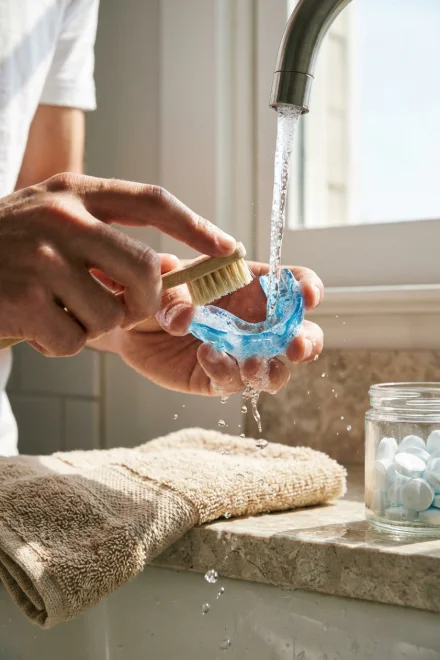
- Wash it after each use: use lukewarm water and a neutral soap or mild toothpaste.
- Dry it completely: before storing it in its case, make sure it has no moisture to prevent fungal growth.
- Use a ventilated case: always store the guard in a case with ventilation holes.
- Avoid extreme heat: do not leave the guard in the sun or inside a hot car, as it could deform.
In addition to daily cleaning, it is recommended to soak it once a week in an antibacterial mouthwash or specific solutions for cleaning dental prosthetics for deep disinfection.
Common mistakes when choosing your protection
One of the most frequent mistakes is prioritizing design or color over material quality. A guard with flashy designs but made of thin, rigid plastic will not protect your tooth roots from a sharp blow.
Another common failure is not renewing the guard in time. With use, the material loses its absorption capacity and becomes thinner in areas of higher pressure. If you notice that the guard is cracked, has rough edges that hurt your gums, or no longer stays in place on its own, it is time to replace it immediately.
Finally, many beginners buy guards of inappropriate sizes. A guard that is too large will cause nausea and chafing, while one that is too small will leave the back molars exposed, increasing the risk of jaw injuries. Coverage must be total up to the last molars for real safety.
Conclusion
Choosing the ideal mouthguard is one of the smartest and most economical investments you can make in your sporting career. It not only protects your smile but ensures that you can continue training with confidence and safety after receiving impacts.
Whether you choose a high-end moldable model or a custom-made one, make sure the fit is perfect and maintenance is constant. In boxing, prevention is the best defense, and a good guard is your first line of resistance.
Do not skimp on your safety: always choose professional quality to protect your oral health.
Frequently asked questions about how to choose a boxing mouthguard
Why is it mandatory to use a mouthguard in boxing?
The mouthguard not only protects teeth from breaking, but it also cushions impacts that could cause jaw fractures, lip lacerations, and reduces the risk of concussions by preventing the jaw from violently colliding with the skull.
What is the difference between a single and a double mouthguard?
The single protector covers only the upper arch and allows for easier breathing. The double protector covers both arches and offers maximum protection, but makes air intake more difficult, which is why it is usually less popular among boxers.
How do you mold a 'boil and bite' mouthguard?
You must submerge it in boiling water for a few seconds (according to the manufacturer's instructions), briefly pass it through cold water, and then bite it firmly while pressing with your fingers and tongue so that it adapts to the shape of your teeth.
How long does a boxing mouthguard last?
It is recommended to change it every 6 to 12 months. With constant use, the material loses its shock absorption capacity and can accumulate bacteria or become deformed, compromising the athlete's safety.
Is a custom-made mouthguard better than a standard one?
The custom-made protector (made by a dentist) is superior in protection and comfort, as it fits perfectly. However, high-quality gel models are an excellent, more affordable option for most practitioners.
How do I know if the mouthguard fits me correctly?
A well-fitted protector should stay in place without the need to constantly bite it. It should not fall out when opening the mouth and should not cause nausea or put excessive pressure on the gums.
Can a mouthguard be used with braces?
Yes, but you must use a specific orthodontic mouthguard. These models are wider and are not heat-molded in the same way to avoid damaging the brackets or hindering planned tooth movement.
How to clean and disinfect the mouthguard correctly?
Wash it with warm water and mild soap after each use. You can also use a soft toothbrush. Always store it in its ventilated case to prevent the growth of fungi and bacteria.
What materials are the safest for a mouthguard?
The most recommended materials are EVA (Ethylene Vinyl Acetate) and shock-absorbing gels, as they offer an excellent combination of flexibility, resistance, and cushioning capacity.
Can a mouthguard help prevent concussions?
Although it does not eliminate them completely, a good mouthguard helps to dissipate the impact energy that travels from the jaw to the base of the skull, significantly reducing the force of the shock.