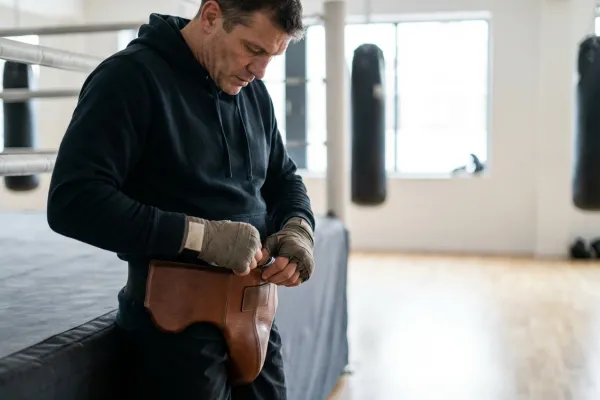

Boxing accessories
Last updated: April 2, 2026
How to choose the perfect boxing hand wraps to protect your hands

Choosing the right hand wraps is as crucial as selecting good gloves. Many beginners underestimate this accessory, but hand wraps are the first line of defense for the small bones of the hand and wrist stability. Factors such as material, length, and closure type determine not only your comfort but also your safety when hitting the bag or sparring.
In this guide, you will learn how to choose the boxing hand wraps that best suit your level and training style. We will analyze the differences between elastic, cotton, and gel wraps, as well as the recommended standard measurements for each hand type.
If you want to avoid common injuries such as wrist sprains or metacarpal fractures, having the right equipment is fundamental. With this information, you can buy with confidence and ensure your hands are protected, dry, and ready for every round.
Why boxing hand wraps are essential
Boxing hand wraps are the most critical accessory for any combat sports practitioner. Their primary function is not to cushion the blow —the gloves take care of that— but to solidify the structure of the hand. By correctly wrapping the fingers, knuckles, and wrist, the wraps keep the bones aligned and reduce the risk of fractures or sprains.
There are different materials, from traditional cotton to modern elastic compounds. The right choice depends on your experience level and the intensity of your training. A good wrap allows the hand to act as a compact block, distributing the impact force evenly throughout the arm.
In addition to bone protection, wraps fulfill a vital hygienic function: they absorb sweat from the hands. This prevents moisture from penetrating the glove padding, extending their lifespan and preventing the appearance of bad odors caused by bacteria.
No matter if you are a beginner or a professional, you should never hit a heavy bag or spar without proper wrapping. It is the most economical and effective investment to prevent injuries that could keep you away from the gym for months.
In conclusion: hand wraps are your hands' first line of defense, ensuring you can train with power and safety day after day.
The importance of length: 2.5m or 4.5m?
One of the most common mistakes when buying hand wraps is choosing the wrong length. Wraps usually come in two standard sizes: 2.5 meters and 4.5 meters (or similar measurements in inches). The difference is not just aesthetic, but functional.
2.5-meter wraps are usually recommended for children or people with very small hands. However, for the average adult, this length is usually insufficient to adequately cover the wrist, knuckles, and perform the crosses between the fingers that stabilize the metacarpals.
4.5-meter wraps are the gold standard in boxing. This length allows for enough loops to create solid padding on the knuckles and, most importantly, to secure the wrist firmly. If you practice boxing, Muay Thai, or MMA regularly, this is the size you should choose.
Remember that a wrap that is too thin offers no real protection against heavy impacts, while one that is too thick could make it difficult for the hand to fit comfortably inside the glove. The balance is found in the wrapping technique and in using the full 4.5-meter length.
Expert tip: If your gloves are 10oz or 12oz and you have large hands, make sure the wrap is not excessively bulky to avoid painful pressure points.
Comparison: Cotton vs. Elastic vs. Gel
To choose the perfect hand wraps, it is essential to understand what each material offers. Cotton wraps (rigid) are preferred by purists; they do not stretch, which forces a perfect wrap but offers immovable support. They are very durable but less comfortable if you don't know how to put them on well.
Elastic or Mexican wraps are the most popular today. Their blend of cotton and spandex allows the wrap to cling to the hand without loosening. They offer the best balance between comfort, protection, and ease of use for most practitioners.
Finally, gel wraps are a modern solution for those seeking convenience. Although they are excellent for protecting the knuckles, they fail in wrist protection, so many experts recommend using them only for light training or combining them with an additional short wrap.
In terms of cost-benefit, 4.5-meter elastic wraps win by a landslide, as they work for any type of training and last for years if cared for properly.
Summary: Choose cotton if you seek maximum rigidity, elastic for versatile daily use, and gel if you prioritize speed in cardio-boxing classes.
Tips for perfect wrapping and maintenance
🥊
Never wrap your hands with a closed fist; keep the hand open and fingers extended to prevent it from being too tight.
📏
Make sure to wrap the wrist at least three times to guarantee total stability upon impact.
🧼
Wash your wraps after every use. Dried sweat makes them rigid and rough, which can cause skin chafing.
🧺
Use a mesh laundry bag when putting them in the washing machine to prevent them from tangling with other clothes.
☀️
Do not use a dryer. Let the wraps air dry to prevent the elastic material from degrading or shrinking.
🔄
Always roll up your wraps after they dry; this makes them easier to put on for the next workout and prevents wrinkles.
🖐️
Don't forget to pass the wrap between the fingers; this prevents the knuckles from colliding with each other upon impact.
🛑
If you feel tingling or cold fingers, remove the wraps immediately and repeat the process with less tension.
🧵
Check the condition of the velcro; if it no longer sticks well, it's time to buy a new pair to prevent them from coming loose inside the glove.
🧪
Avoid using fabric softeners, as they can reduce the fabric's sweat absorption capacity.
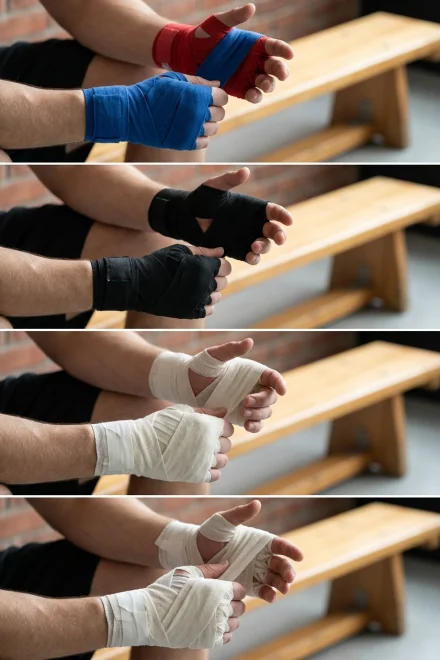
What to choose according to your level and type of training
Your choice should be aligned with your experience and goals. A beginner attending fitness boxing classes twice a week does not have the same needs as an amateur competitor who trains daily.
For beginners, 4.5m elastic wraps are the best option. They are forgiving of wrapping technique errors and provide an immediate sense of security. Gel inner gloves are also popular at this level for their ease of use.
Intermediate and advanced boxers usually prefer high-quality elastic wraps or even professional-style cotton wraps. As punching power increases, precision in wrapping becomes critical to avoid repetitive stress injuries.
If your training focuses on the heavy bag, prioritize wraps with good thickness to protect the knuckles. If you do more sparring, ensure the wrap is compact so the glove fits perfectly and does not shift when receiving impacts.
Ultimately, listen to your hands: if you feel pain after training, you probably need to change the type of wrap or improve your wrapping technique.
Can gel hand wraps be used under normal wraps?
Many boxers with chronic knuckle injuries or especially sensitive hands wonder if they can combine both methods. The answer is yes, but with important nuances.
There are gel knuckle protectors specifically designed to be covered by a traditional wrap. This combination offers the best of both worlds: the impact absorption of the gel and the wrist stability of the cloth wrap.
However, you must be careful with the total volume. If the resulting wrap is too large, you could strain the glove's structure or, worse yet, excessively compress the nerves in the hand, causing pain or numbness.
This technique is very common in professional boxing during heavy bag training, where maximum protection is sought to preserve the hands for competition.
Remember: if you decide to combine systems, make sure your gloves have enough space (usually 14oz or 16oz gloves) to accommodate that extra volume without generating harmful internal pressure.
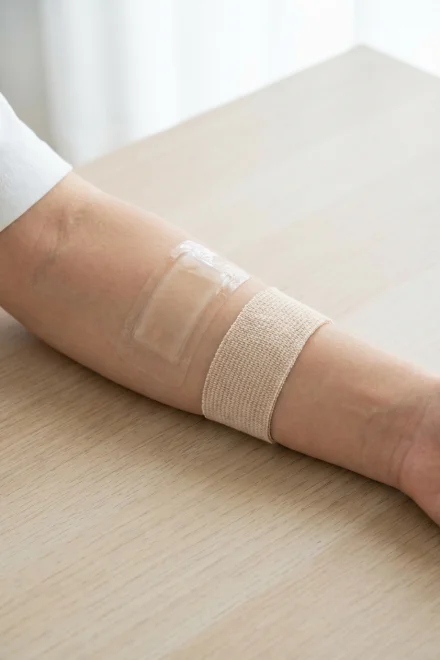
Safety and injury prevention
Boxing is a sport of repetition. A poorly landed punch without proper protection can cause the famous 'boxer's fracture' (metacarpals). Therefore, safety must be your number one priority.
Before starting, check that your wraps do not have internal folds or wrinkles. A wrinkle under the pressure of the glove can turn into a blister or a bothersome wound in the middle of the session.
Do not skimp on the time you spend wrapping your hands. It is preferable to arrive 5 minutes early at the gym and do it calmly than to wrap them in a rush. A loose wrap is almost as dangerous as wearing nothing at all, as it gives a false sense of security.
If you notice persistent pain in your wrists or knuckles despite using good wraps, consult with your coach to review your punching technique. Sometimes, the problem is not the protection, but how the punch lands.
In summary, good wraps, combined with correct technique and quality gloves, are the life insurance for your hands in the ring.
Conclusion: Which boxing hand wraps to choose?
Both elastic wraps and gel wraps have their place in a boxer's gear. The final decision depends on your training pace and how much you value speed over structural support.
For the vast majority, 4.5-meter elastic wraps are the winning choice for their versatility and complete protection. If you are an occasional user of fitness classes, gel wraps will save you time and frustration.
Whatever your choice, maintain consistency in their use and take care of their hygiene. Your hands are your tools in this sport; protect them as they deserve.
Frequently asked questions about how to choose boxing hand wraps
What length of boxing hand wraps should I choose?
For adults, the most recommended standard measurement is 4.5 meters (180 inches). This length allows for enough wraps around the wrist, knuckles, and thumb for total protection. 2.5 or 3.5-meter wraps are usually reserved for children or people with very small hands.
Is it better to use elastic or cotton hand wraps?
Elastic wraps (Mexican style) are the favorites of most because they fit the contour of the hand better and do not loosen during training. Cotton wraps are more durable and rigid, ideal for those looking for very firm support, although they require more technique to put on.
What are gel wraps and when to use them?
Gel wraps or 'inner gloves' are a quick option that slides on like a glove. They are excellent for light training or when you have little time, but they offer less structural support for the wrist than traditional cloth wraps.
How tight should the hand wraps be?
They should be firm but not tight. If you feel tingling in your fingers or they change color, they are too tight. If when you close your fist you feel that the hand is compact and protected, the fit is correct.
How often should I wash my hand wraps?
Ideally, you should wash them after every use or every two intense workouts. Sweat accumulates bacteria that generate bad odors and can deteriorate the material of your gloves from the inside. Use a laundry bag to prevent them from getting tangled in the washing machine.
Can I use MMA hand wraps for boxing?
Yes, but keep in mind that MMA wraps are usually shorter to allow for the mobility needed in grappling. For pure boxing, where the impact is constant and frontal, the full length of 4.5 meters is recommended to maximize protection.
When is it time to change my hand wraps for new ones?
You should replace them when the velcro no longer sticks correctly, if the fabric has lost its elasticity, or if they show tears. Worn-out wraps do not offer the necessary tension to stabilize the joints.
Is it necessary to wrap the thumb?
Yes, the thumb is one of the fingers that suffers the most injuries from poorly executed impacts. A good wrap should always include a thumb anchor to keep it close to the hand and prevent hyperextensions.
How to prevent hand wraps from tangling when washing them?
The trick is to use a mesh laundry bag and close the velcro before putting them in. When you take them out, stretch them well while they are damp and roll them up once dry so they are ready for the next workout.
What color of hand wraps is best?
The color is purely aesthetic, but keep in mind that dark-colored wraps (black, blue, red) hide sweat or blood stains better, while white ones require more thorough washing to maintain their clean appearance.